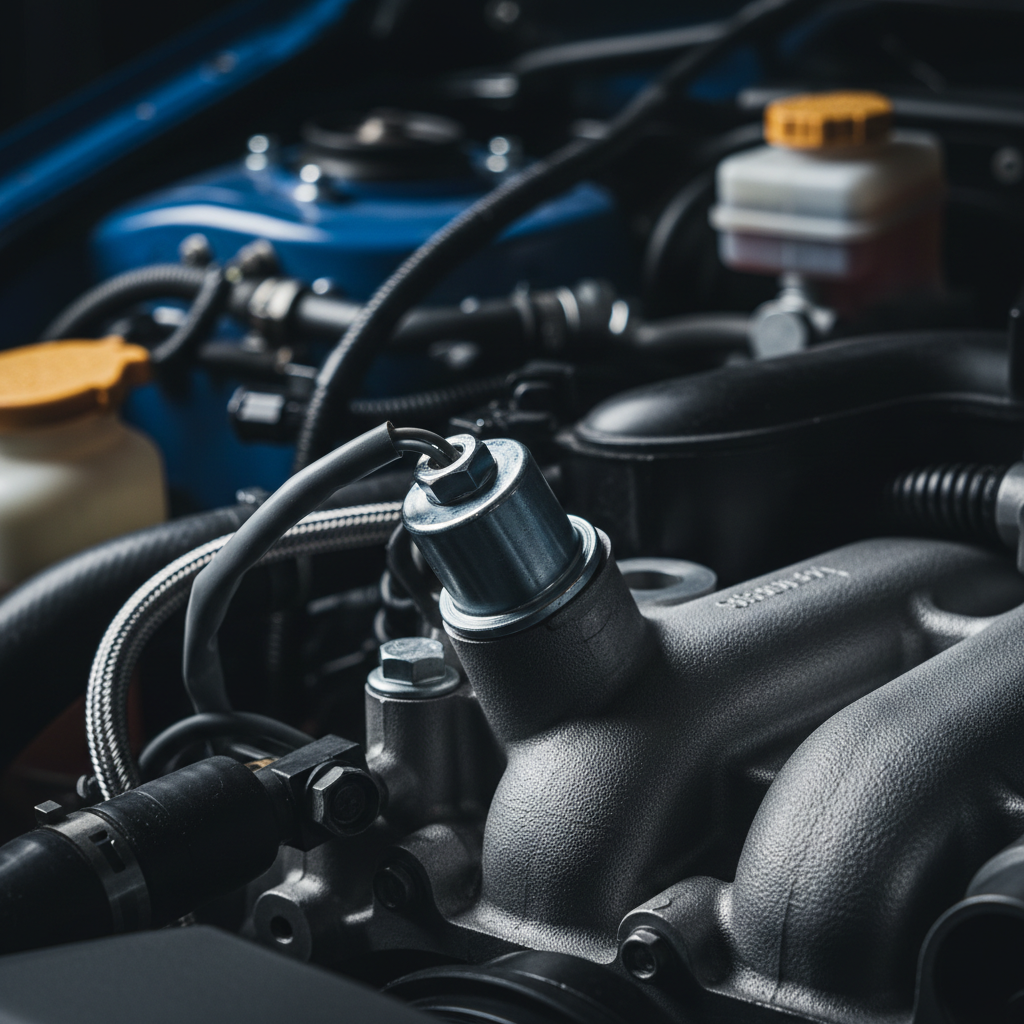
Why WRX STI Knock Sensors Cause Phantom Power Loss
Your WRX STI knock sensor is probably lying to your ECU right now. These sensors develop internal issues that send false positive knock signals, causing the ECU to pull 3-4 degrees of timing across the entire power band without throwing a single code. The result? You lose 50+ horsepower and never know why.
- WRX STI knock sensors fail internally without triggering CEL codes
- False knock signals cause ECU timing pull of 3-4 degrees across the power band
- Power loss typically ranges from 50-80 horsepower on modified engines
- Symptoms include rough idle, hesitation, and unexplained performance drops
- Only proper datalogging reveals the phantom knock events vs real engine knock
Phantom knock events: False positive knock signals generated by failing knock sensors that cause ECU timing retard without actual engine detonation occurring.
What WRX STI Knock Sensor Failure Actually Looks Like
The WRX STI knock sensor system uses piezoelectric sensors to detect engine vibrations in the 5-8 kHz range where detonation occurs. When these sensors develop internal faults, they start picking up normal engine noise as knock events. Your ECU doesn’t know the difference between real knock and sensor noise.
Here’s what happens in the data. Normal knock correction should show occasional spikes of -1.41 to -2.81 degrees under high load, returning to zero when conditions improve. A failing knock sensor shows constant correction values of -4.22 to -7.03 degrees across multiple cylinders, even under light throttle conditions where knock is impossible.
The ECU adds learned knock correction on top of real-time corrections. This means temporary phantom knock events become permanent timing reductions stored in the ECU’s long-term memory. Your engine runs with pulled timing even when the knock sensor momentarily behaves.
Most owners notice the symptoms months before connecting them to knock sensor failure. Rough idle develops because timing gets pulled at low RPM. Hesitation during acceleration occurs as the ECU reduces timing under load. Peak power drops but dyno sessions often get blamed on fuel quality or ambient conditions.
The Data Tells the Real Story
Real knock events show specific patterns in the logs. Actual detonation correlates with high cylinder temperatures, advanced timing, or lean AFR conditions. The knock correction appears on specific cylinders under high load, typically cylinders 2 and 4 on the STI’s unequal length header setup.
Phantom knock looks completely different. The correction values appear randomly across all cylinders. You’ll see -2.81 degrees of correction at 2500 RPM with 50% throttle and 10.8:1 AFR. Those conditions can’t generate real knock. The timing corrections don’t correlate with load, temperature, or fuel mixture.
Failed sensors also create inconsistent readings between cylinders. Real knock affects specific cylinders based on physical conditions like hot spots or carbon deposits. Sensor failure shows correction scattered across cylinders with no logical pattern. Cylinder 1 might show -1.41 degrees while cylinder 3 shows -5.63 degrees under identical conditions.
The power loss compounds over time. Fresh phantom knock events trigger immediate timing reduction. The ECU learns this correction and applies it permanently. Additional false events stack more learned correction. Engines end up running 8-10 degrees less timing than optimal across the entire map.
How to Fix Phantom Knock Issues
Start with knock sensor replacement, but don’t stop there. The STI uses two sensors mounted on the engine block. Replace both sensors simultaneously because they typically fail within months of each other. Genuine Subaru sensors work best – aftermarket units often have different sensitivity curves that create tuning issues.
Clear all learned corrections after sensor replacement. This requires either a Cobb Accessport or professional tuning software. The ECU won’t automatically forget previous knock corrections just because you installed new sensors. You need to manually reset the learned knock maps.
Re-tune the knock detection sensitivity if you’re running modifications. Stock knock tables work for stock engines, but modified engines with different exhaust notes and increased noise levels need recalibrated thresholds. A proper tune adjusts knock sensitivity to match your engine’s actual noise signature.
Verify the fix with datalogging. Run multiple pulls monitoring knock correction, timing advance, and cylinder temperatures. Proper sensors should show minimal correction (-0.7 to -1.41 degrees) only under extreme conditions. Consistent corrections above -2.81 degrees indicate remaining issues.
What Happens When You Ignore Failing Knock Sensors
The power loss gets progressively worse as learned corrections accumulate. Engines that initially lose 30-40 horsepower end up losing 80+ horsepower within six months. The ECU keeps learning more aggressive corrections with each false knock event.
Real engine damage becomes possible when you can’t distinguish phantom knock from actual detonation. Owners often ignore genuine knock events because they assume all corrections are sensor-related. This leads to actual engine damage from uncontrolled detonation.
Tuning becomes impossible with failing sensors. Dyno sessions waste time and money as tuners chase phantom knock corrections. Maps get overly conservative to account for false readings. The engine never achieves its potential power output even with perfect tuning.
Drivability suffers significantly. Rough idle conditions worsen as low-RPM timing gets pulled. Throttle response degrades under partial load conditions. The car feels sluggish even though boost pressure and AFR remain normal.
How do I know if my WRX STI knock sensor is failing?
Look for consistent knock corrections above -2.81 degrees under light load conditions where real knock is impossible. Failed sensors show random correction patterns across cylinders with no correlation to engine temperature, load, or AFR. Symptoms include rough idle, hesitation during acceleration, and unexplained power loss without CEL codes. Datalogging reveals corrections at RPM and load combinations that can’t generate actual detonation.
Can bad knock sensors damage my STI engine?
Failed knock sensors don’t directly damage engines, but they mask real knock events that can cause damage. When sensors constantly report false positives, you might ignore actual detonation when it occurs. Additionally, phantom knock events cause excessive timing retard that reduces power and can lead to incomplete combustion and carbon buildup over time.
How much horsepower do I lose from phantom knock corrections?
Phantom knock typically costs 50-80 horsepower on modified STI engines depending on accumulated learned corrections. Each degree of timing retard represents approximately 8-12 horsepower loss. Failing sensors often cause 4-6 degrees of total correction across the power band, resulting in significant power reduction without obvious symptoms.
Should I replace one knock sensor or both on my STI?
Replace both knock sensors simultaneously even if only one shows obvious failure. STI knock sensors typically fail within months of each other due to identical operating conditions and age. Replacing only one sensor often results in the second failing shortly after, requiring duplicate labor and ECU correction clearing procedures.
Stop guessing about your knock corrections and start analyzing real data. TorqueMetrics shows you exactly what’s happening inside your engine. Upload your next datalog and see what your STI is really telling you.