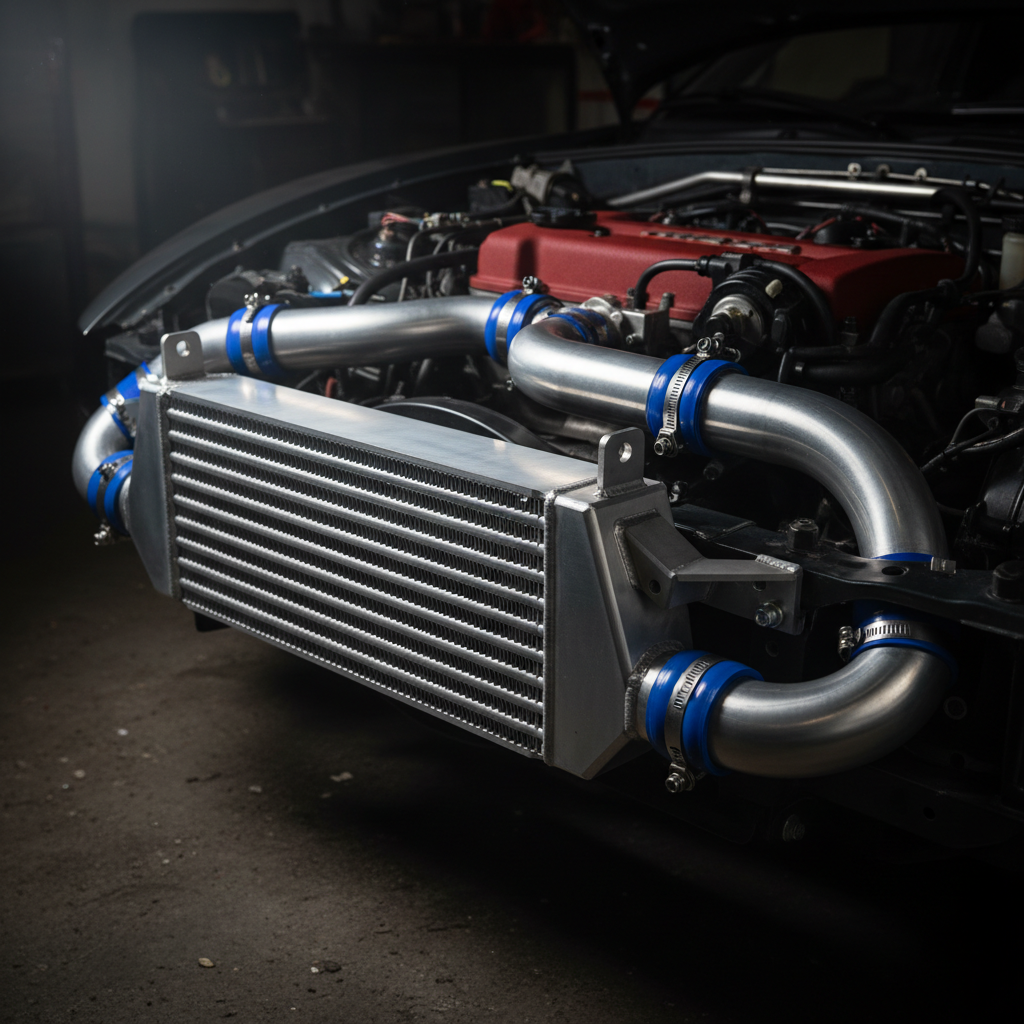
Why Miata Intercooler Upgrades Lose Power on Stock Tune
A bigger intercooler should make more power. That’s the theory. But dyno sheets from turbocharged Miatas tell a different story, owners regularly lose 10-15whp after intercooler upgrades when running stock tunes. The problem isn’t the intercooler. It’s that your ECU is pulling 3-6 degrees of timing because the MAP sensor is reading air density values the factory calibration never expected.
Quick Answer
- Stock Miata ECU timing tables are calibrated for specific intercooler flow characteristics and pressure drops
- Upgraded intercoolers change MAP sensor readings, triggering timing retard built into factory safety parameters
- Power losses of 10-15whp are common until the tune is adjusted for new airflow patterns
- The fix requires recalibrating timing advance tables and MAP-based load calculations
- Dyno results improve immediately once timing is restored to optimal levels
Intercooler timing calibration: The relationship between intercooler pressure drop, air density changes, and the ECU’s timing advance calculations that determine optimal ignition timing for a given airflow scenario.
Why Your ECU Pulls Timing After Intercooler Upgrades
The factory ECU doesn’t just read boost pressure and call it good. It’s constantly calculating air density based on MAP readings, intake air temps, and expected pressure drops across the intercooler. When you bolt on a larger intercooler, you change the entire airflow equation the ECU was calibrated around.
Here’s what actually happens: Your stock intercooler has a specific pressure drop, usually 1.5-2.5psi at 15psi of boost. The ECU knows this. Its timing tables account for it. Install a larger, more efficient intercooler and that pressure drop might fall to 0.8-1.2psi. Suddenly the MAP sensor is reading higher manifold pressure than the ECU expected for a given compressor outlet pressure.
The ECU interprets this as potentially dangerous conditions, higher cylinder pressure than anticipated, and pulls timing accordingly. We’ve seen factory ECUs retard timing by 4-6 degrees on turbo Miatas after intercooler upgrades, even when intake temps dropped 40-50 degrees. The safety logic overrides the temperature benefits every time.
This isn’t limited to Mazdaspeed Miatas either. Any turbocharged platform with sophisticated knock detection and adaptive timing will exhibit similar behavior when you change airflow characteristics without updating the calibration.
What the Dyno Data Actually Shows
Real dyno results from intercooler upgrades on stock tunes are remarkably consistent. Peak power drops 8-15whp despite intake air temperatures falling 30-60 degrees. The power curve flattens out in the upper RPM range where timing advance matters most. Torque production stays relatively stable because low-RPM timing tables are more conservative to begin with.
The most telling data point is timing advance under load. Stock intercooler runs typically show 22-26 degrees of advance at peak torque on 93 octane. After the intercooler upgrade, that same load point shows 18-22 degrees, a loss of 4-6 degrees that directly correlates with the power drop.
Knock counts don’t increase. In fact, they often decrease because of the lower intake temps. But the ECU’s load-based timing retard kicks in before knock protection ever becomes a factor. The engine is making less power than it safely could, leaving performance on the table.
Air-fuel ratios typically stay within normal parameters. This isn’t a fueling issue masquerading as a timing problem. The MAF sensor still reads airflow accurately, and fuel delivery adjusts accordingly. The timing retard is purely a function of the ECU’s load calculation being thrown off by the intercooler’s different pressure drop characteristics.
How to Fix Intercooler Timing Issues
The solution is straightforward but requires actual tuning. You need to recalibrate the ECU’s load calculations and timing tables to account for the new intercooler’s flow characteristics. This isn’t a job for an off-the-shelf tune, it requires custom mapping based on your specific setup.
First, establish your new pressure drop baseline. Log manifold pressure at the MAP sensor and compressor outlet pressure simultaneously across the RPM range. Calculate the actual pressure drop your new intercooler creates under various load conditions. This becomes your new calibration reference.
Next, adjust the load calculation tables. The ECU uses these to determine how much cylinder pressure it’s dealing with at any given boost level. Update these tables to reflect your intercooler’s actual pressure drop instead of the factory unit’s characteristics.
Finally, restore timing advance to optimal levels. With accurate load calculations, you can safely run the timing advance the engine actually wants, often 2-4 degrees more than the retarded values the confused ECU was pulling. The result is immediate power recovery plus the thermal benefits of the intercooler upgrade.
Expect to see power gains of 15-25whp over the stock intercooler baseline once the tune is sorted. You’re getting both the timing advance back and the density benefits of cooler air.
What Goes Wrong When You Skip the Retune
Running an intercooler upgrade without proper tuning leaves significant power on the table, but that’s just the beginning. The ECU’s confused load calculations can cause inconsistent behavior under varying conditions. Power delivery becomes unpredictable as the ECU struggles to adapt to airflow patterns it wasn’t calibrated for.
Datalogging reveals erratic timing advance values that vary more than they should across similar load conditions. The ECU’s adaptive logic tries to compensate, but it’s working from flawed baseline assumptions. This creates a moving target that makes consistent performance impossible.
Some owners try to compensate with boost increases, thinking more pressure will overcome the timing retard. This approach backfires spectacularly. Higher boost with retarded timing generates more heat and stress while producing minimal power gains. You’re working the turbo harder for worse results.
The thermal benefits of the intercooler upgrade get partially negated too. Yes, intake temps are lower, but the engine isn’t taking advantage of that cooler air because timing is too conservative. You’ve solved the heat problem but created an efficiency problem that costs nearly as much power.
Frequently Asked Questions
Can I just run more boost to compensate for the timing retard?
No, increasing boost with retarded timing is counterproductive. You’ll generate more heat and stress the turbo harder while making minimal power gains. The timing retard negates most benefits of additional pressure. Fix the timing calibration first, then optimize boost levels. Higher boost on proper timing will always outperform higher boost on retarded timing.
Will an off-the-shelf tune fix intercooler timing issues?
Most generic tunes don’t account for specific intercooler pressure drop characteristics. They might restore some timing advance, but they won’t properly calibrate load calculations for your exact setup. Custom tuning that measures your intercooler’s actual flow characteristics produces better results. The difference between a generic tune and proper calibration is usually 5-8whp.
How do I know if my ECU is pulling timing after an intercooler upgrade?
Log timing advance under load and compare it to baseline values from before the upgrade. Look for 3-6 degrees less advance at the same load points, even when knock counts are low or zero. Also monitor MAP sensor readings, they should be higher than before for the same boost levels if your new intercooler has lower pressure drop.
Do all turbocharged cars have this intercooler timing issue?
Any modern ECU with sophisticated load-based timing maps can exhibit this behavior. It’s most common on platforms with adaptive timing systems and detailed calibrations like Mazdaspeed vehicles, but Subaru, Volkswagen, and other manufacturers use similar logic. Older or simpler ECUs with basic boost-only timing tables are less affected.
The data doesn’t lie, intercooler upgrades need proper calibration to deliver their full potential. Your datalogs will show exactly what’s happening with timing advance and load calculations. That’s where platforms like TorqueMetrics become invaluable for tracking the real-world effects of modifications and ensuring your tune is optimized for your specific setup.