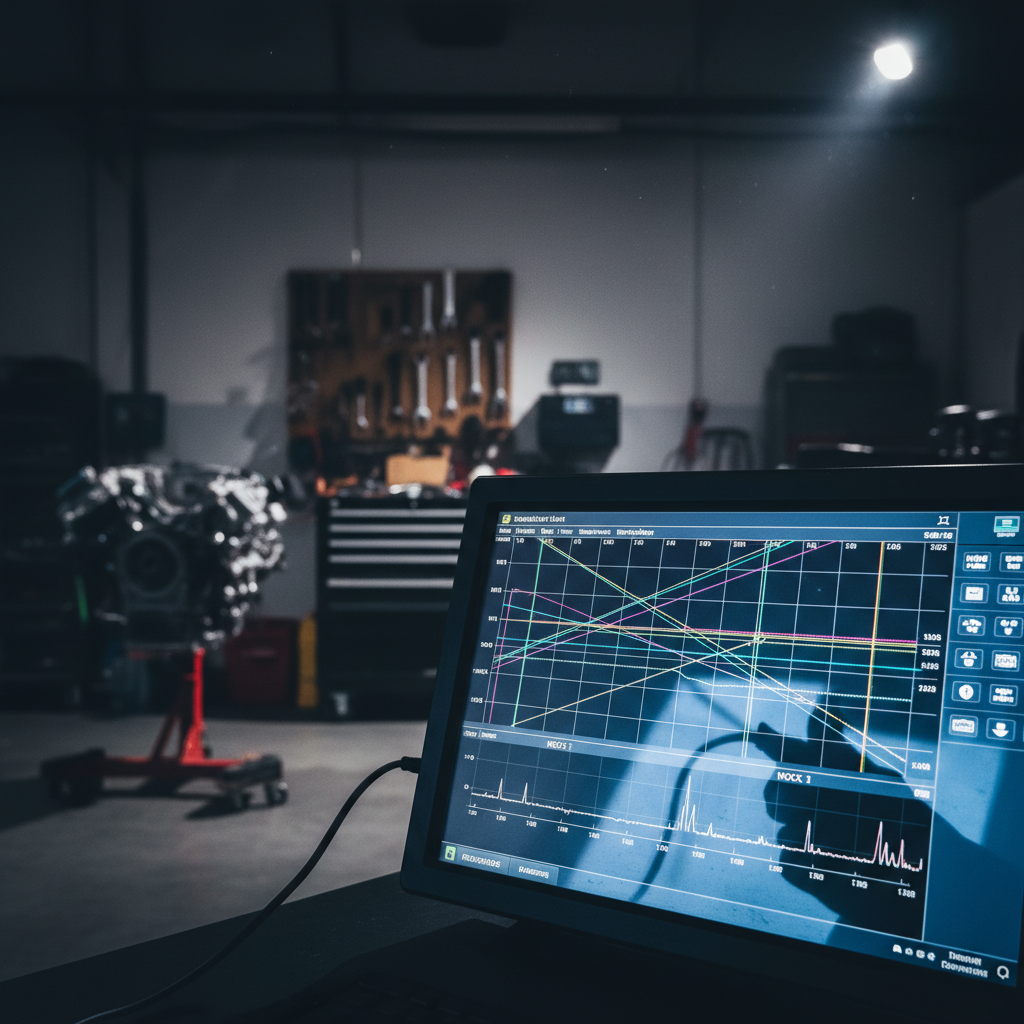
Should You Tune Stock Parts First? Spring Tuning Season Truth
Spring tuning season is here, and most people are doing it backwards. They’re booking dyno time for expensive turbo swaps and intake upgrades when their stock setup is leaving 20-30% on the table. Proper baseline tuning and knock detection optimization will outperform bolt-ons every single time on a factory turbo that’s never seen a custom map.
Quick Answer
- Stock turbos typically see 20-30% power gains from baseline tuning alone before any hardware modifications
- Factory knock detection systems pull 8-12 degrees of timing unnecessarily, costing significant power
- Proper AFR optimization on pump gas can add 15-25 WHP without touching boost levels
- Spring dyno slots fill up fast, but tuning stock parts first maximizes your budget and time
- Hardware upgrades show minimal gains on poorly tuned baseline maps
Baseline tuning: Optimizing factory engine management parameters like timing maps, fuel delivery, and knock detection thresholds before adding performance hardware. It’s the foundation that determines whether your expensive modifications actually deliver their advertised gains.
Why Stock Setups Leave So Much Power on the Table
Factory ECUs are programmed for worst-case scenarios. Your car needs to run on 87 octane in Death Valley with a clogged air filter and 200,000 kilometres on the clock. The timing maps reflect this reality, pulling degrees of advance that your setup doesn’t need.
Take a typical factory WRX making 268 WHP on a baseline pull. The ECU is pulling 8-10 degrees of timing under boost because the knock sensors are overly sensitive. Fine-tuning those thresholds and optimizing the timing map for 91 octane typically adds 35-45 WHP before touching boost pressure. That’s a 15% gain from software alone.
The fuel maps are equally conservative. Factory AFRs run rich for component protection, often hitting 10.2-10.5 under load when 11.8-12.2 would make more power while staying completely safe on pump gas. Fix the fueling, dial in the timing, and suddenly your “stock” turbo is making power that would have required a bigger compressor wheel.
This is why experienced tuners always start with baseline optimization. The hardware might be stock, but the software defining its performance envelope isn’t optimized for your specific use case.
What the Dyno Data Actually Shows
Real-world baseline sessions tell the story. A stock STI typically makes 280 WHP on the first pull. After timing optimization and AFR tuning, the same car makes 320-340 WHP at the same boost level. No new parts, just proper calibration of what was already there.
The torque curve improvements are even more dramatic. Stock timing maps often show power dropping off after 5,500 RPM because the ECU is pulling timing aggressively in the upper rev range. Proper knock detection tuning keeps timing steady, extending the power band by 800-1,000 RPM. You’re not just making more peak power, you’re making it over a wider range.
Boost pressure tells another story. Factory cars often show 2-3 PSI of boost variation between cylinders due to intake manifold design compromises. A good tune can’t fix the hardware, but it can adjust fuel delivery per cylinder to compensate. The result is smoother power delivery and less strain on the weakest cylinder.
Temperature compensation is huge too. Factory ECUs pull timing aggressively when intake air temps climb past 35°C. Proper calibration extends that threshold to 45-50°C while monitoring knock activity. In summer driving, that’s the difference between pulling timing at every red light versus maintaining performance in real-world conditions.
How to Maximize Your Spring Tuning Budget
Book your baseline session first, not last. Get three pulls on the stock setup, then let your tuner optimize timing maps, fuel delivery, and knock detection thresholds. This takes 2-3 hours on most platforms and costs a fraction of hardware upgrades.
Use that baseline session to identify actual bottlenecks. Maybe your stock turbo is maxed out and needs upgrading. More likely, your intake air temps spike under load, or your fuel system can’t maintain pressure past 6,000 RPM. The data will tell you exactly what needs attention.
Document everything during the baseline session. Log timing advance, knock counts, AFRs, and boost pressure across the entire RPM range. This becomes your reference point for measuring hardware upgrade effectiveness later. Without baseline data, you’re guessing whether that new downpipe actually delivered its promised gains.
Consider E85 if it’s available in your area. The octane rating alone lets you run 4-6 degrees more timing advance, and the cooling properties drop intake air temps by 8-12°C under boost. Many “stock” setups see 40-50 WHP gains just from fuel choice optimization.
Plan your modifications in order of impact. Proper tuning first, then supporting modifications like intercoolers and fuel system upgrades, then power adders. Each step builds on the previous one instead of hoping expensive parts will compensate for poor calibration.
What Goes Wrong When People Skip Baseline Tuning
The most common mistake is throwing parts at an untuned car. A $2,000 turbo upgrade on a stock tune might add 10-15 WHP when it should add 50-60. The factory ECU doesn’t know how to manage the new hardware, so you’re paying premium prices for entry-level gains.
Worse, untuned modifications often hurt reliability. That bigger turbo spools differently than stock, hitting peak boost earlier in the RPM range when the ECU expects lower pressure. The result is overboosting, timing pull, and heat buildup that the factory cooling system wasn’t designed to handle.
Another issue is mismatched modifications. People add a cold air intake and catback exhaust without adjusting MAF scaling or fuel trims. The car runs lean under load, pulls timing to prevent knock, and makes less power than stock while risking engine damage. The parts work fine, but the ECU doesn’t know they exist.
Dyno time gets wasted too. Tuners spend hours troubleshooting issues that baseline optimization would have identified and fixed. What should be a straightforward hardware tune becomes a diagnostic session, eating into your budget and timeline. Spring scheduling is tight enough without adding unnecessary complications.
Frequently Asked Questions
How much power can I expect from baseline tuning on a stock turbo?
Most stock turbocharged setups see 20-30% power gains from proper baseline tuning alone. This translates to 35-50 WHP on typical platforms like WRX, GTI, or Focus ST models. The exact gains depend on how conservative your factory tune is and whether you’re switching to higher octane fuel. Cars with more aggressive factory tuning from the manufacturer will see smaller gains, while economy-focused platforms often have huge untapped potential in the timing and fuel maps.
Should I install bolt-on modifications before or after getting a baseline tune?
Always get the baseline tune first on completely stock hardware. This establishes your true starting point and identifies the actual bottlenecks in your setup. Many people assume they need a bigger turbo when their real limitation is intake air temps or fuel system capacity. The baseline session will show you exactly what’s holding back performance, letting you spend modification money on parts that actually matter instead of guessing what might help.
How long does baseline tuning take and what should it cost?
Baseline optimization typically takes 2-4 hours on the dyno, depending on your platform and how much the factory tune needs adjustment. Expect to pay $400-800 for a thorough baseline session including timing optimization, AFR tuning, and knock detection calibration. This is significantly less than most single performance modifications and often delivers bigger gains than bolt-on parts costing thousands of dollars.
Can baseline tuning hurt my warranty or engine reliability?
Professional baseline tuning actually improves reliability by removing unnecessary timing pull and optimizing fuel delivery for your specific driving conditions. The modifications stay well within safe parameters for your hardware. However, any ECU modification will void your powertrain warranty with most manufacturers. The reliability gains come from running optimized parameters instead of overly conservative factory settings that cause knock retard and rich running conditions under normal driving.
Spring tuning season fills up fast, but starting with proper baseline optimization gives you the biggest return on investment. Your stock turbo has more potential than you think, and the data will prove it. Ready to see what your car is really capable of? TorqueMetrics helps you analyze every pull and track your gains across the entire tuning process.