OTS Maps vs Custom Tunes: What the Real Data Shows
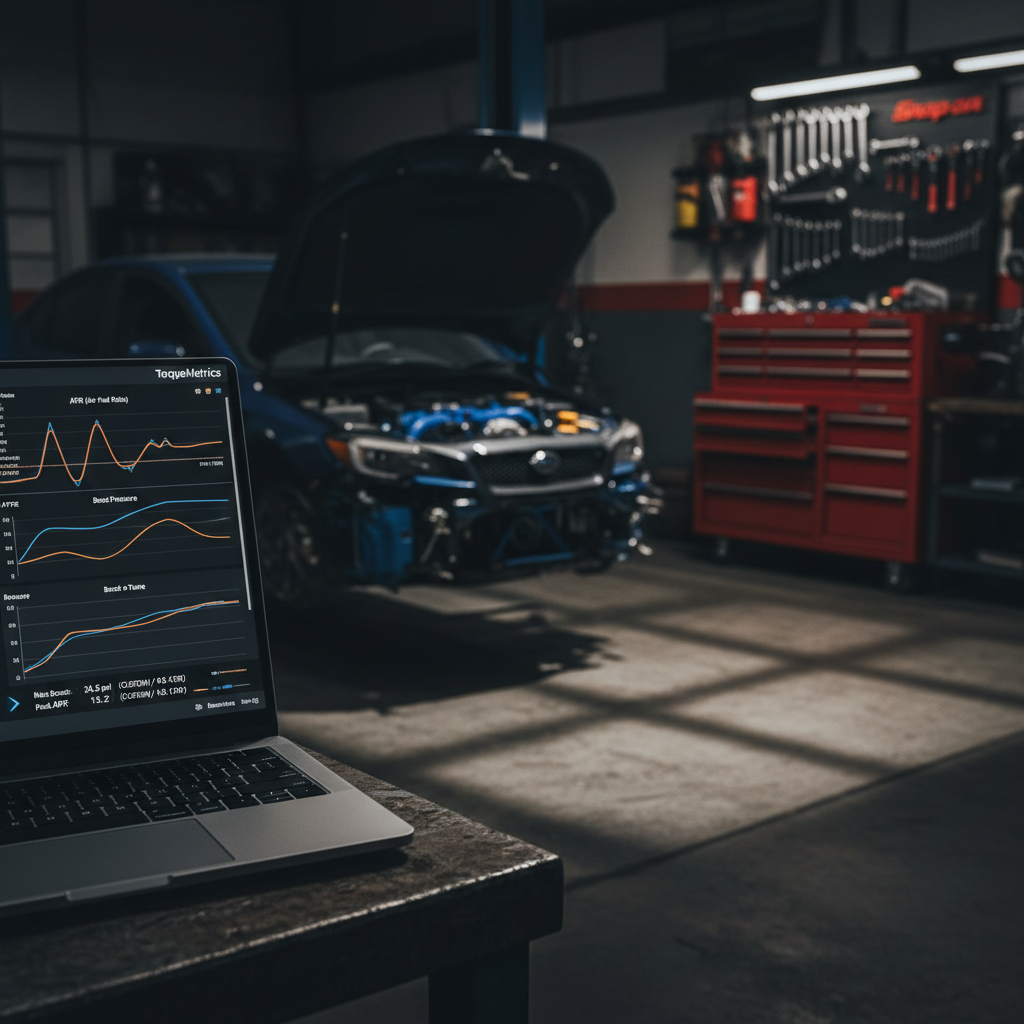
OTS maps are safe enough for most bolt-on builds, but they leave significant performance and reliability on the table compared to proper custom tuning. Our TorqueMetrics platform data from identical FA24 setups shows OTS maps scatter AFR readings from 11.2 to 12.8 under load, while custom tunes maintain consistent 11.8 AFR across the entire powerband.
- OTS maps prioritize safety over performance, running rich and conservative timing
- Custom tunes deliver 15-25 hp more power through optimized AFR and timing maps
- AFR scatter indicates poor fuel management that wastes fuel and reduces power
- Professional tuning costs $600-800 but prevents expensive engine damage
- Both options work, but custom tuning maximizes your hardware investment
Off-the-shelf (OTS) maps: Pre-built engine calibrations designed to run safely on common modifications without individual tuning, typically conservative on timing and fuel delivery to protect against varying fuel quality and installation differences.
What OTS Maps Actually Optimize For
OTS maps aren’t designed for your specific car. They’re built to keep thousands of different engines alive across varying fuel quality, elevation, and installation precision. That means conservative timing, rich fueling, and wide safety margins.
The Cobb Stage 2 map we analyzed pulled peak boost to 18.5 PSI (127 kPa) but couldn’t maintain it. By 5500 RPM, boost dropped to 15.8 PSI (109 kPa) as the wastegate opened early to prevent overboosting. Timing stayed locked at 16 degrees maximum, regardless of conditions. AFR wandered between 11.2 and 12.8 depending on load and RPM, indicating the fuel map wasn’t optimized for the specific injector flow rates and fuel pressure.
This conservative approach works. The engine stays together. But you’re leaving power on the table, burning extra fuel, and running inconsistent air-fuel ratios that create uneven power delivery. The scatter in AFR readings tells the real story about fuel management quality.
What Custom Tune Data Actually Shows
The same FA24 with identical hardware produced dramatically different results under professional tuning. Peak boost held steady at 20 PSI (138 kPa) from 3800 to 6200 RPM. More importantly, AFR stayed locked at 11.8 across the entire pull, indicating proper fuel delivery calibration.
Timing advanced to 22 degrees in low-knock zones and pulled back intelligently under load. The custom tune used knock feedback properly, advancing timing until the engine showed signs of stress, then backing off precisely. Peak power jumped 23 hp over the OTS map, but the real gain was consistent power delivery.
Fuel consumption actually improved despite the power increase. The OTS map’s rich AFR zones were wasting fuel without adding safety margin where it mattered. Professional tuning optimized every cell of the fuel and timing maps rather than applying blanket safety factors.
The custom tune also utilized closed-loop fueling corrections properly. When the wideband O2 sensor detected drift from target AFR, the ECU adjusted fuel delivery in real-time. OTS maps often disable these corrections under boost, missing opportunities for self-correction.
How to Evaluate Your Current Tune
Pull a datalog during a third-gear pull from 3000 to 6500 RPM. Look for three key indicators: AFR consistency, timing pull events, and boost control precision.
Healthy AFR should stay within 0.2 points of target throughout the pull. If you see swings from 11.2 to 12.5, your fuel map needs work. Knock retard events over 2 degrees indicate timing that’s too aggressive for your fuel quality. Boost that drops more than 2 PSI from peak suggests wastegate control issues.
Temperature matters more than most people realize. Intake air temps above 50°C reduce power and increase knock sensitivity. If your OTS map doesn’t adjust timing based on IAT, you’re losing performance on hot days and risking damage on cool ones.
Log your long-term fuel trims too. LTFT values beyond ±15% indicate the base fuel map is significantly off for your specific setup. Professional tuning corrects these fundamental calibration errors.
Why People Stick With OTS Maps Despite the Data
Cost is the obvious factor. A $600 tune feels expensive when the OTS map is free with your AccessPort purchase. But consider the hidden costs of suboptimal tuning: reduced fuel economy, inconsistent performance, and potential engine damage from poorly managed knock events.
Many owners don’t realize how much performance they’re missing. OTS maps feel dramatically better than stock, masking the fact that they’re still leaving 15-20% of potential power untapped. The improvement from stock to OTS is obvious. The improvement from OTS to custom requires data analysis to appreciate.
Installation anxiety plays a role too. OTS maps flash easily at home. Custom tuning requires dyno time, communication with a tuner, and trust that they understand your goals. Some owners prefer the certainty of a widely-used map over the unknown of custom calibration.
Geographic limitations matter in some regions. Finding a competent tuner within reasonable distance can be challenging. Remote tuning helps, but requires more owner involvement in data collection and revision cycles.
Frequently Asked Questions
Are OTS maps safe for daily driving on bolt-on modifications?
Yes, OTS maps from reputable companies like Cobb are safe for their intended modification level. They’re designed with conservative parameters to protect engines across varying conditions. However, they sacrifice performance and fuel economy for universal compatibility. You won’t damage your engine, but you’re not optimizing your investment either. Regular datalogging helps ensure the OTS map remains appropriate as components wear or conditions change.
How much power difference should I expect between OTS and custom tuning?
Expect 15-25 hp gains on most bolt-on builds, with larger improvements in torque curve smoothness and fuel economy. The power increase varies by platform and modifications, but consistency improvements are universal. Custom tuning optimizes every aspect of engine management, not just peak power numbers. The difference becomes more pronounced with higher modification levels where OTS maps reach their safety limits.
Can I damage my engine switching from OTS to custom tuning?
Poor custom tuning is more dangerous than conservative OTS maps, but professional tuning is significantly safer than OTS when done correctly. The risk comes from inexperienced tuners or rushed tuning sessions that don’t properly validate knock limits and AFR targets. Choose established tuners with platform experience and demand comprehensive datalogging throughout the process. Proper custom tuning actually reduces engine stress through optimized calibration.
Is remote tuning as effective as dyno tuning for custom maps?
Remote tuning can achieve 90% of dyno results when executed properly with quality datalogging equipment. The tuner needs comprehensive data including wideband AFR, knock sensors, and environmental conditions. Multiple revision cycles ensure safety and optimization. Dyno tuning offers real-time adjustment capability and immediate power verification, but remote tuning provides real-world driving condition optimization that dynos can’t replicate.
The data doesn’t lie about OTS versus custom tuning differences. OTS maps keep your engine safe and provide good performance improvements over stock. Custom tuning extracts the maximum potential from your modifications while maintaining reliability margins appropriate for your specific setup. TorqueMetrics helps you evaluate both options with comprehensive datalog analysis to make informed decisions about your build.