Why Your Car Loses 20% Power in Summer Heat (And What to Fix)
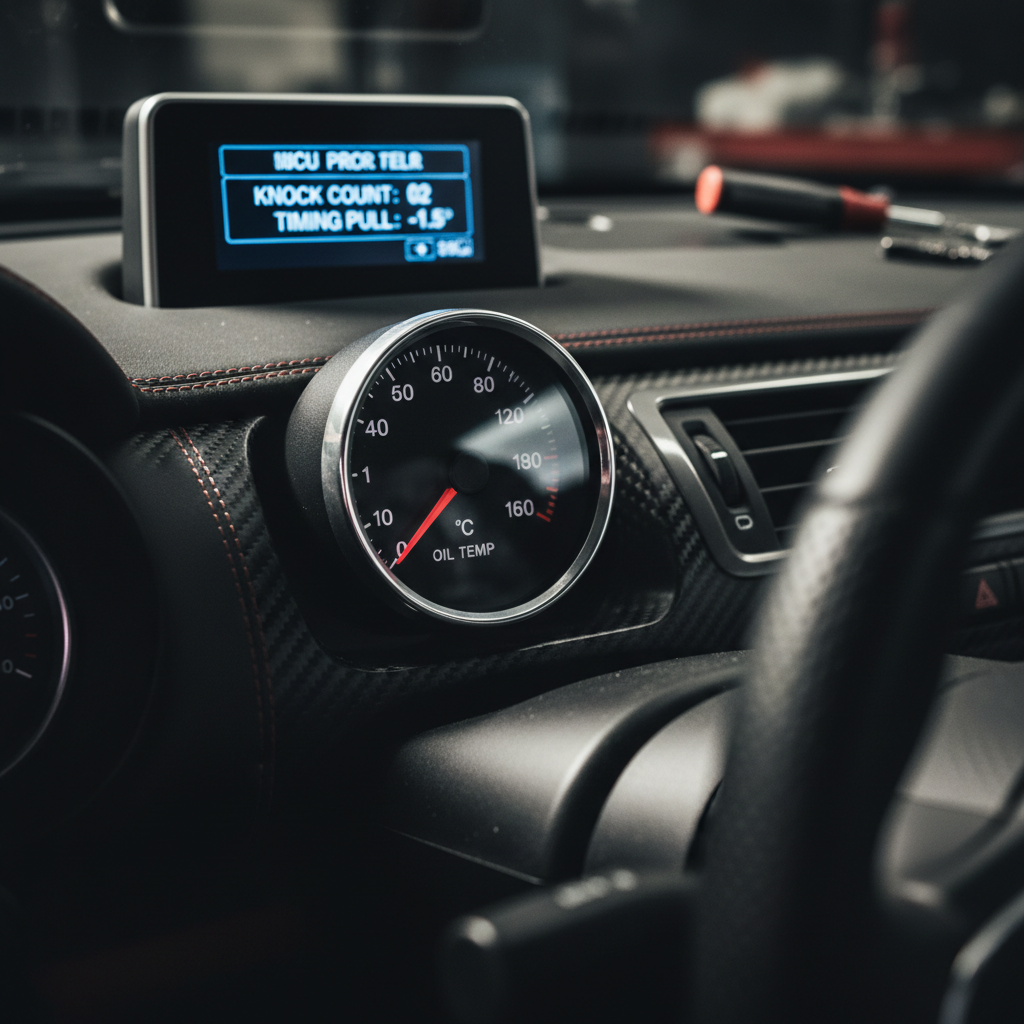
Summer heat costs you 15-20% of your car’s power, and most enthusiasts are looking at the wrong data to fix it. Your knock threshold drops from -6 to -11 degrees when ambient temperatures hit 35°C, oil temps climb past the ECU’s comfort zone, and timing gets pulled whether you see it happening or not.
- Knock thresholds drop 15-20% when ambient temps exceed 30°C, causing timing retard even with upgraded intercoolers
- Oil temperatures above 115°C trigger ECU protection modes that pull timing and reduce boost targets
- Most power loss happens invisibly through timing maps, not obvious knock events you can hear
- Oil cooling upgrades deliver bigger gains than intercooler mods in sustained high-temp driving
- Data logging oil temps, intake temps, and timing correction reveals where you’re actually losing power
Heat-induced power loss: The reduction in engine output that occurs when high ambient temperatures cause ECU timing retard, knock threshold changes, and protection mode activation, often happening invisibly through background map adjustments rather than obvious knock events.
Why Summer Heat Kills Your Power Before You Notice
Your ECU doesn’t wait for audible knock to start pulling power. Most modern engine management systems run continuous background calculations that adjust timing based on intake air temperature, oil temperature, and coolant temperature. When ambient temps climb past 30°C, these calculations start working against you.
The knock threshold shift is the big one. At 20°C ambient, your ECU might tolerate -6 degrees of knock retard before pulling timing. At 35°C, that same threshold drops to -10 or -11 degrees. Your engine is now operating in a much narrower window, and the ECU responds by preemptively reducing timing advance to stay within safe parameters.
Oil temperature compounds the problem. Above 115°C oil temp, most factory ECUs activate protection modes that reduce boost targets by 2-4 PSI and pull 2-3 degrees of timing across the entire map. This happens gradually, so you don’t feel the sudden power drop that would make you investigate. You just notice your car feels slower on track days or spirited drives, especially later in the session.
The intercooler everyone talks about? It’s addressing intake charge temperatures, which matter, but it’s not fixing the oil temp problem or the knock threshold shift. You can have 40°C intake temps and still lose 15% power to timing retard if your oil is sitting at 125°C.
What the Data Actually Shows in Summer Driving
Real-world datalogging reveals the pattern every summer. A properly tuned car making 320 whp in spring conditions will drop to 270-280 whp during sustained summer driving, even with an upgraded intercooler. The power loss shows up in three specific places in your logs.
First, timing correction values start climbing. Instead of seeing 0 to -2 degrees under boost, you’re logging -4 to -6 degrees consistently. This isn’t knock retard from audible knock events, it’s the ECU’s proactive timing reduction based on temperature inputs.
Second, your boost targets get reduced. A car tuned for 18 PSI (124 kPa) might only hit 16 PSI (110 kPa) when oil temps exceed 120°C. The ECU isn’t throwing codes or going into limp mode, it’s just quietly protecting itself by reducing boost requests.
Third, your AFR starts running richer. The ECU enriches the mixture as a cooling strategy when it detects high oil or coolant temperatures. Instead of your tuned 11.8 AFR under boost, you might see 11.2 or 11.0 AFR. Richer mixture cools the combustion chamber, but it also costs power.
The specific numbers vary by platform, but the pattern is consistent. A Subaru WRX typically shows 3-4 degrees of timing pull and 2-3 PSI boost reduction when oil temps hit 115°C. An Evo will pull similar timing but tends to maintain boost longer. German cars often have more aggressive oil temp protection, pulling timing at 110°C oil temp instead of 115°C.
What to Actually Fix for Summer Performance
Oil cooling should be your first priority, not intercooler upgrades. An oil cooler that keeps your temps below 105°C under sustained load will prevent most ECU protection modes from activating. You want a cooler sized for your power level, typically 19-25 row for 250-350 whp applications, with thermostatic control to maintain proper warm-up temperatures.
Location matters more than size. Front-mount oil coolers get better airflow but are vulnerable to road debris. Side-mount coolers behind the front bumper get decent airflow with better protection. Avoid mounting coolers in the engine bay where they just add heat to an already hot environment.
Your tune needs summer-specific adjustments. Most people run the same map year-round, but summer driving demands different parameters. Oil temp-based timing tables should be more aggressive, pulling less timing at higher oil temps if your cooling system can maintain reasonable temperatures. Boost targets can be maintained longer if oil temps stay controlled.
Intercooler upgrades matter, but not how most people think. The intercooler’s job is maintaining consistent intake temps during heat soak situations, like sitting in traffic between track sessions. A good intercooler keeps your intake temps within 20°C of ambient during sustained driving. If you’re seeing 60°C+ intake temps with a stock intercooler, an upgrade will help, but it won’t fix oil temp issues.
Data logging becomes critical for summer tuning. You need to monitor oil temp, coolant temp, intake air temp, timing correction, and actual boost vs. target boost. Log these parameters during your typical driving scenarios to identify exactly where you’re losing power.
What Goes Wrong When You Ignore Temperature Management
The most common mistake is chasing power mods while ignoring thermal management. You’ll add a bigger turbo, upgrade injectors, and get a more aggressive tune, then wonder why your car doesn’t feel faster during summer track days. The extra power potential gets eaten up by temperature-related timing retard.
Intercooler-only cooling approaches fail in sustained driving. Your intake temps might stay reasonable, but oil temps climb unchecked. The ECU still pulls timing and reduces boost based on oil temperature, negating most of your intercooler’s benefits. You’ve solved half the problem and wonder why you’re not seeing results.
Ignoring oil temps leads to actual engine damage over time. Sustained operation above 125°C oil temp breaks down oil additives, reduces viscosity, and accelerates bearing wear. Your ECU’s protection modes aren’t just performance killers, they’re preventing expensive engine rebuilds.
Many enthusiasts mistake heat-related power loss for other issues. They chase fuel system upgrades, ignition components, or even major engine work when the real problem is thermal management. A $800 oil cooler setup would have solved their 20% power loss, but instead they spend $4000 on modifications that don’t address the root cause.
Summer tuning without proper datalogging creates invisible problems. You might have a car that feels great in spring conditions but disappoints during summer events. Without logging oil temps and timing correction, you’ll never identify why your lap times slow down as sessions progress, or why your car feels sluggish during hot weather street driving.
Frequently Asked Questions
What oil temperature should I target to avoid ECU power reduction?
Most ECUs start reducing power when oil temps exceed 110-115°C, with aggressive protection modes kicking in above 120°C. Target 95-105°C oil temp under sustained load for optimal performance. This typically requires an oil cooler in summer conditions or track driving. Monitor your specific platform’s behavior through datalogging, as some manufacturers are more conservative than others.
How much power loss should I expect from summer heat without cooling upgrades?
Expect 15-20% power loss during sustained summer driving compared to cool weather performance. This shows up as 3-6 degrees of timing retard, 2-4 PSI boost reduction, and enriched AFR. A 300 whp car typically drops to 240-255 whp in hot conditions without proper cooling. The loss is gradual and often goes unnoticed until you compare datalogs or dyno results.
Is an intercooler or oil cooler more important for summer performance?
Oil cooling delivers bigger performance gains in summer conditions. Intake temps matter, but most ECU power reduction comes from oil temperature-based protection modes. An oil cooler prevents timing retard and boost reduction that costs 15-20% power, while an intercooler primarily prevents knock from high intake charge temperatures. Install oil cooling first, then address intake charge cooling if needed.
Can I just tune around high oil temperatures instead of installing cooling?
Tuning around high oil temps is a short-term bandaid that risks engine damage. While you can adjust timing tables to be less aggressive at high oil temps, sustained operation above 120°C breaks down oil chemistry and accelerates wear. Proper cooling is the only sustainable solution. Attempting to tune for high oil temps often results in a car that runs poorly in normal conditions.
What specific datalog parameters show heat-related power loss?
Monitor oil temperature, timing correction, actual vs target boost pressure, and AFR under load. Heat-related power loss shows as: oil temps above 115°C, timing correction of -4 degrees or more, boost falling 2+ PSI below target, and AFR running 0.3-0.5 points richer than your tune. Compare these values between cool morning drives and hot afternoon sessions to quantify your power loss.
Summer driving doesn’t have to mean accepting 20% power loss. Proper thermal management through oil cooling, appropriate tuning, and consistent datalogging keeps your car performing at its potential regardless of ambient conditions. TorqueMetrics makes it easy to spot these temperature-related power losses in your datalogs, helping you identify exactly where your cooling upgrades will deliver the biggest performance gains.