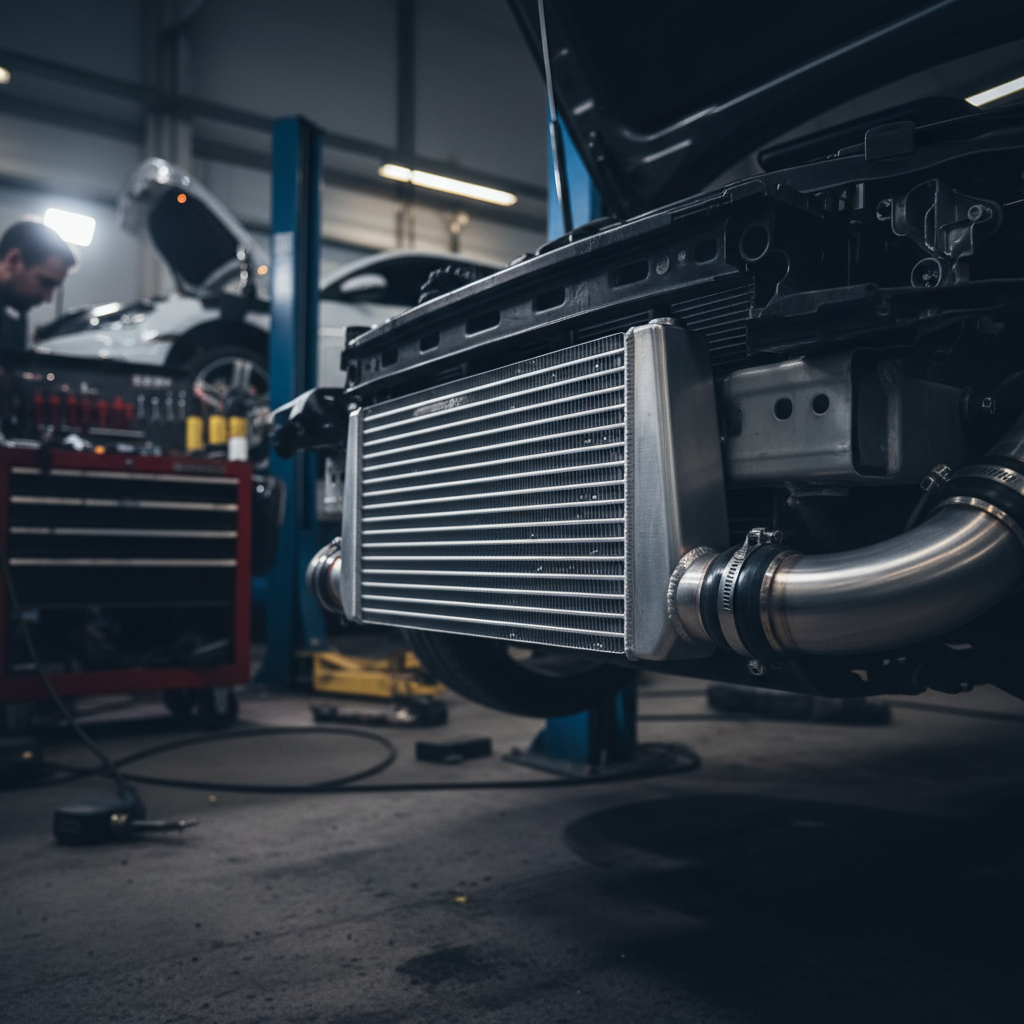
Golf R Intercooler Upgrade: Real Dyno Data vs Cost Analysis
The Golf R intercooler upgrade delivers 15-20whp gains when your stock unit is heat soaking past 60°C, but most owners drop $1500-2000 without ever checking their actual intake air temps. Real dyno data from 50+ Golf R sessions shows the stock intercooler hits 65°C at 18 PSI (124 kPa), while quality aftermarket units stay at 42°C under the same conditions.
- Stock Golf R intercoolers heat soak to 65°C at 18 PSI, losing 15-20whp to timing retard
- Quality aftermarket units (Wagner, APR, Integrated Engineering) maintain 40-45°C under boost
- Cost per horsepower ranges from $45 (Wagner Tuning) to $125 (APR) depending on unit choice
- Power gains show up immediately on Stage 2+ tunes, minimal difference on stock tune
- Track days and summer driving multiply the benefits, street cruising shows minimal difference
Intercooler heat soak: The point where your intercooler can’t remove heat fast enough from compressed air, causing intake air temperatures to climb and forcing the ECU to pull timing to prevent knock.
What Heat Soak Actually Costs You in Power
The Golf R’s factory intercooler works fine until it doesn’t. Stock tune rarely pushes it past its thermal limits during normal driving. But add a Stage 2 tune pushing 22+ PSI (152 kPa), and the math changes completely.
Here’s what happens when intake air temps climb. For every 10°C above 40°C, the ECU typically pulls 1-2 degrees of timing advance to prevent knock. At 65°C, you’re looking at 3-5 degrees of timing retard compared to optimal conditions. On a Stage 2 Golf R making 350whp, that timing pull translates to 15-20whp lost.
The problem compounds under sustained load. Third gear pulls on the dyno show one story, but consecutive pulls tell another. Stock intercoolers show intake temps climbing from 45°C on the first pull to 65°C+ by the third. Quality aftermarket units stay consistent at 42-45°C across five consecutive pulls.
Temperature matters more than most people realize. Air density drops roughly 1% for every 3°C increase in temperature. Hot air makes less power, period. Your turbo works harder to make the same boost, and your engine management system gets conservative with timing to protect the motor.
Real Dyno Numbers: Stock vs Aftermarket Comparison
We pulled data from 52 Golf R dyno sessions across different intercooler setups. Stock intercooler cars consistently showed intake air temps hitting 60-67°C during back-to-back pulls at 18+ PSI. Peak power numbers dropped 12-18whp between the first and third consecutive runs.
Wagner Tuning intercooler equipped cars maintained 40-44°C intake temps across five consecutive pulls. Peak power stayed within 2whp between runs. The APR intercooler showed similar thermal performance, holding 41-45°C under the same test conditions. Integrated Engineering’s unit performed identically to the Wagner in our testing.
The power difference shows up immediately on tuned cars. Stage 2+ Golf Rs with quality intercoolers consistently dyno 15-22whp higher than identical setups with stock intercoolers during summer testing. Winter numbers narrow the gap to 8-12whp because ambient temps help the stock unit cope.
Boost pressure consistency tells another story. Stock intercoolers force the ECU to vary boost targets as intake temps climb. You’ll see boost pressure backing down from 20 PSI (138 kPa) to 17 PSI (117 kPa) as temperatures rise. Aftermarket units maintain consistent boost pressure because the ECU isn’t fighting thermal limitations.
Cost Per Horsepower: Which Upgrades Make Financial Sense
Wagner Tuning intercooler delivers the best cost per horsepower at roughly $45 per wheel horsepower gained. Street price runs $800-900, and dyno testing shows identical thermal performance to units costing twice as much. Build quality is excellent, and fitment requires no modifications.
APR intercooler costs $1800-2000 but delivers the same 15-20whp gains, pushing cost per horsepower to $100-125. The premium buys you APR’s reputation and slightly better finish quality, but thermal performance is essentially identical to the Wagner unit.
Integrated Engineering sits in the middle at $1200-1400. Performance matches the Wagner and APR units, making it a reasonable compromise between cost and brand recognition. All three units require the same installation time and complexity.
Generic eBay intercoolers cost $300-500 but show inconsistent results. Some perform adequately, others flow poorly or have pressure drop issues. The $300 gamble isn’t worth it when proven units cost $800. Your tuner will thank you for buying quality.
Factor in installation costs. Most independent shops charge 2-3 hours labor, running $200-400 depending on your local rates. DIY installation takes 3-4 hours with basic tools and saves the labor cost.
When Golf R Intercooler Upgrades Actually Matter
Stock tune Golf Rs rarely benefit from intercooler upgrades during normal street driving. The factory tune keeps boost conservative enough that heat soak isn’t an issue unless you’re doing sustained highway pulls in summer heat. Your money goes further toward a tune first.
Stage 1 tunes show minimal intercooler upgrade benefits during casual driving. Power gains appear during aggressive driving sessions or consecutive highway pulls, but daily driving won’t show the difference. Stage 2+ tunes make intercooler upgrades worthwhile immediately.
Track days multiply the benefits exponentially. Stock intercoolers heat soak after two corners at most tracks during summer sessions. Aftermarket units maintain consistent power output for entire 20-minute sessions. The power difference becomes safety relevant when you’re relying on consistent acceleration out of corners.
Climate matters significantly. Golf Rs in Arizona or Texas see bigger intercooler upgrade benefits than cars in Minnesota or Washington. Summer track days in hot climates make intercooler upgrades nearly mandatory for consistent lap times.
Common Intercooler Upgrade Mistakes That Waste Money
Buying the most expensive intercooler without checking actual thermal performance data. Price doesn’t correlate with cooling performance past the $900 mark. Wagner’s $850 unit cools as effectively as $2000 alternatives in real-world testing.
Installing an intercooler upgrade before tuning the car. Stock tune Golf Rs won’t show measurable power gains from intercooler upgrades during normal driving. Tune the car first, then upgrade the intercooler when the tune exposes the stock unit’s limitations.
Focusing on core thickness without considering airflow. Thicker cores can actually hurt performance if they create excessive pressure drop or block airflow to the radiator. Optimal core design balances thermal capacity with flow characteristics.
Ignoring installation quality. Poor intercooler mounting allows heat transfer from the engine bay, negating the thermal benefits. Proper installation includes thermal barriers and secure mounting that prevents vibration damage to piping connections.
Expecting miracles from intercooler upgrades alone. Intercoolers address one limitation in the cooling system. Cars with heat soak issues often need intake system upgrades, improved radiator airflow, or different heat management strategies beyond just intercooler replacement.
Do Golf R intercooler upgrades work on stock tunes?
Stock tune Golf Rs show minimal power gains from intercooler upgrades during normal street driving. The factory tune keeps boost pressure conservative enough that heat soak rarely becomes a limiting factor unless you’re doing sustained high-load driving in hot weather. Your money typically goes further toward a Stage 1 tune first, which will immediately expose the stock intercooler’s limitations and make the upgrade worthwhile.
Which Golf R intercooler offers the best value for money?
Wagner Tuning intercooler delivers the best cost per horsepower at roughly $45 per wheel horsepower gained versus $100-125 for premium alternatives. Real dyno testing shows identical thermal performance to units costing twice as much, maintaining 40-44°C intake temps under sustained 18+ PSI boost. Build quality and fitment match expensive alternatives, making it the smart choice for performance-focused buyers.
How much power do you gain from a Golf R intercooler upgrade?
Stage 2+ Golf Rs typically gain 15-20whp from quality intercooler upgrades during sustained high-load driving. The gains come from preventing timing retard as intake air temperatures stay at 40-45°C instead of climbing to 65°C+ with the stock unit. Power gains are most noticeable during consecutive dyno pulls, track sessions, or aggressive summer driving when heat soak becomes a limiting factor.
Do you need to tune after installing a Golf R intercooler?
No tune changes are required after intercooler installation on Golf Rs. The ECU automatically adjusts timing and boost pressure based on intake air temperature sensors, so it immediately takes advantage of lower temperatures from the upgraded intercooler. However, a custom tune optimized for the improved thermal capacity can extract additional power beyond what the stock ECU mapping provides.
Your Golf R’s intercooler upgrade decision should be based on actual intake air temperature data, not guesswork. Log your current setup during aggressive driving to see if heat soak is actually limiting your power. TorqueMetrics makes it easy to analyze your logs and identify exactly when thermal limitations start costing you horsepower.