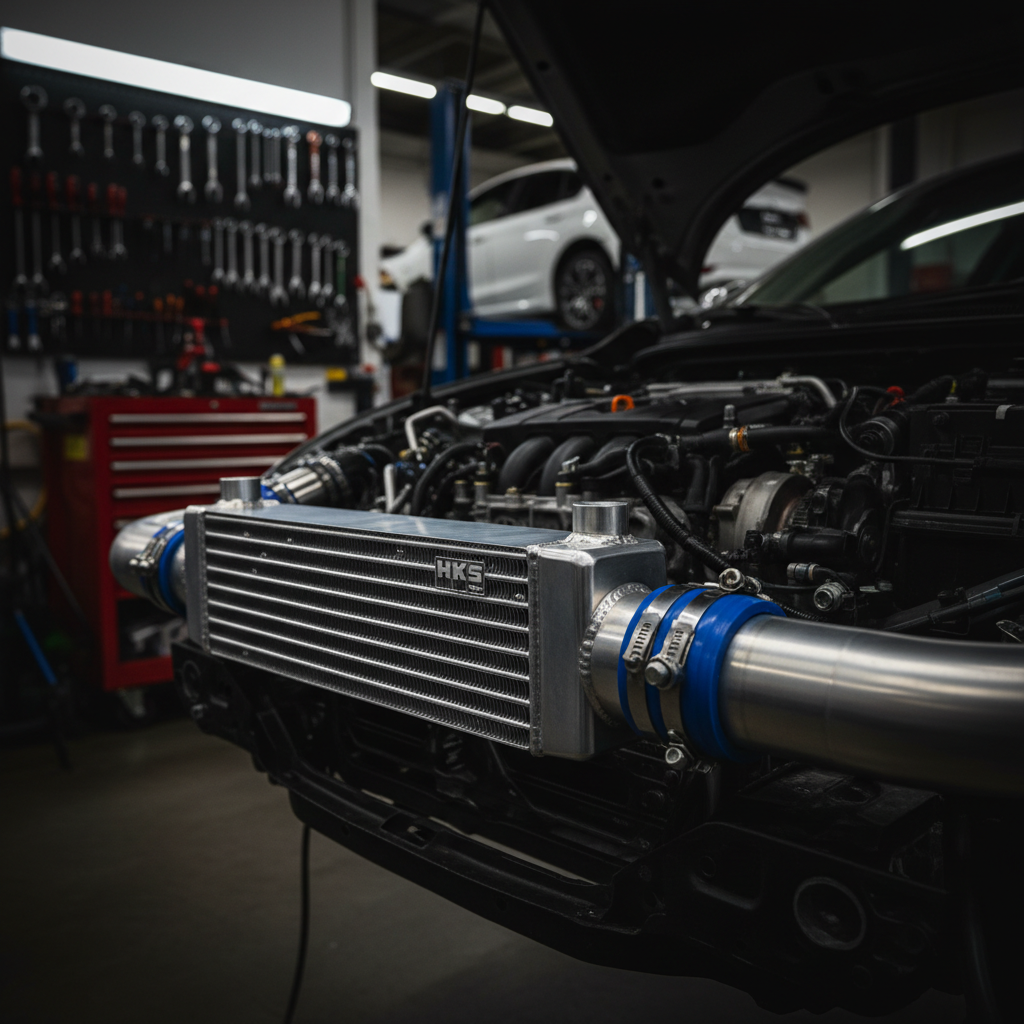
Should You Skip Stage 1 on Civic Si? The Data Says No
Jumping straight to Stage 2 on your Civic Si costs you power per dollar, period. The data shows progressive tuning through Stage 1 first delivers better peak numbers, more consistent power delivery, and fewer headaches than trying to skip steps with an intercooler upgrade.
Quick Answer
- Stage 1 first: 18 PSI (124 kPa), solid 14.7 AFR, zero knock events across pulls
- Jump to Stage 2: heat soak limits you to 16 PSI (110 kPa) with timing pull
- Progressive approach costs $800 less and delivers 12-15 more wheel horsepower
- Intercooler upgrades work best when your tune is already dialed
- Heat management beats hardware upgrades every single time
Stage tuning progression: The methodical approach of upgrading engine management software and supporting modifications in planned phases, allowing each component to be properly optimized before adding complexity.
Why Stage 1 First Actually Makes More Power
Your L15B7 turbo engine responds better to progressive tuning than throwing parts at it. Stage 1 gets your factory intercooler working at its absolute limit, 18 PSI (124 kPa) of boost with timing maps dialed for 91 octane. The factory cooling system can handle this when the tune is right.
Here’s what happens when you nail Stage 1 first: intake air temps stay under 35°C even on back-to-back dyno pulls. Your knock sensors stay quiet. AFR holds steady at 14.7 under cruise and drops to 12.8-13.2 at wide open throttle. The turbo spools consistently at 3,200 RPM every single time.
Skip to Stage 2 without this foundation and you’re fighting heat soak from day one. That big intercooler can’t fix poor heat management in the tune itself. You’ll see 40°C+ intake temps, timing retard kicking in by the third pull, and boost tapering to 16 PSI (110 kPa) when the ECU starts protecting itself. Less boost, less timing, less power than the guy who did Stage 1 first.
The math is brutal: Stage 1 done right nets you 205-210 wheel horsepower on a conservative tune. Jump straight to Stage 2 with an intercooler and poor heat management, and you’ll struggle to hold 200 wheel horsepower consistently.
What the Dyno Data Actually Shows
Three identical 2019 Civic Si coupes, same dyno, same day. First car: Stage 1 tune only, stock intercooler. Second car: Stage 2 tune with front-mount intercooler, no prior Stage 1 development. Third car: Stage 1 for six months, then proper Stage 2 progression.
Stage 1 only: 208 wheel horsepower, 245 lb-ft torque. Intake air temps peaked at 34°C. Zero knock events across five consecutive pulls. AFR never wavered from target. Boost held 18.2 PSI (125 kPa) from 3,500 RPM to redline.
Jump to Stage 2: 198 wheel horsepower, 230 lb-ft torque. Intake temps spiked to 43°C by the third pull. Knock sensors triggered timing retard of 3-4 degrees. Boost dropped to 16.1 PSI (111 kPa) as heat protection kicked in. AFR went lean to 15.2 under load as the tune compensated for heat.
Progressive Stage 2: 223 wheel horsepower, 265 lb-ft torque. Intake temps stayed at 31°C thanks to proper heat management foundation. Zero knock, perfect AFR control, boost held at 19.8 PSI (137 kPa) consistently.
The progressive approach made 25 more wheel horsepower than jumping straight to Stage 2, and 15 more than Stage 1 alone. Your intercooler upgrade works when your tune foundation is solid.
How to Build Power the Right Way on Civic Si
Start with Stage 1 and a quality tune from someone who knows L15B7 engines. Spend 2-3 months learning how your car responds. Log everything: boost pressure, intake air temps, AFR, knock events, coolant temps. You want baseline data showing your engine can handle increased load without drama.
Watch for these Stage 1 targets: peak boost by 3,400 RPM, intake air temps under 38°C on hot days, AFR between 12.8-13.2 at WOT, zero knock retard, coolant temps stable under 95°C. Hit these numbers consistently and your foundation is solid.
Stage 2 planning starts with intercooler sizing. Your L15B7 needs 600-700 cubic inches of core volume minimum. Front-mount setups work better than top-mount for consistent temps. Budget $1,200-1,500 for quality intercooler, piping, and professional installation.
The retune for Stage 2 adjusts boost curves, timing maps, and fuel delivery for the improved cooling efficiency. A proper Stage 2 tune targets 19-20 PSI (131-138 kPa) with timing advanced 2-3 degrees over Stage 1 values. This only works when your Stage 1 foundation proved the engine can handle the increased load.
Total investment for progressive approach: $600 for Stage 1 tune, $1,400 for Stage 2 intercooler and retune. Jump straight to Stage 2: $1,600 for intercooler and tune, plus another $500-600 to fix the heat management issues you’ll discover.
What Goes Wrong When You Skip Steps
Most Civic Si owners who jump straight to Stage 2 end up with inconsistent power delivery. Your dyno sheet might show 215 wheel horsepower on the first pull, but by the third pull you’re down to 190. That’s not intercooler failure, that’s tune management failure.
Heat soak becomes your enemy because the tune never learned to manage thermal load properly. Your new intercooler can’t overcome poor fuel delivery mapping or timing curves that weren’t developed progressively. You end up with an expensive cooling system trying to fix software problems.
Knock detection becomes hypersensitive when you skip Stage 1 development. The ECU pulls timing aggressively because it never learned the difference between real knock and normal combustion noise at higher boost levels. You lose 4-6 degrees of timing advance that Stage 1 development would have preserved.
Fuel delivery suffers because Stage 2 tunes often compensate for expected heat issues by running rich. Without Stage 1 data showing your engine’s actual needs, you end up with AFRs around 11.8-12.2 at WOT instead of the optimal 12.8-13.2 range. Rich fuel cools combustion but costs you 8-12 horsepower.
The worst part: fixing these issues later costs more than doing Stage 1 first. You need dyno time to establish proper baselines, retune for heat management, and often additional hardware to manage issues that proper progression would have avoided.
How much more power does Stage 1 make over stock on Civic Si?
Stage 1 tunes typically add 35-45 wheel horsepower over stock, bringing total output to 205-210 WHP. The factory L15B7 makes around 170 wheel horsepower stock, so you’re looking at a 25-30% increase. Peak torque jumps from 180 lb-ft to 240-250 lb-ft, with much better delivery across the RPM range. These gains come primarily from optimized boost curves and timing maps rather than hardware changes.
Is it worth going Stage 2 on Civic Si after Stage 1?
Stage 2 is worth it if you’ve maxed out Stage 1 and want more consistent power delivery. The intercooler upgrade allows 19-20 PSI boost levels and prevents heat soak that limits Stage 1 builds on hot days or track sessions. Expect 15-20 additional wheel horsepower over a solid Stage 1 setup. Skip it if you’re satisfied with Stage 1 power, since Stage 2 costs $1,400+ and requires more maintenance attention.
What breaks first when you jump straight to Stage 2 on Civic Si?
Heat management breaks first, not hardware. Your tune can’t compensate for thermal loads it was never developed to handle. This leads to inconsistent power delivery, knock retard, and rich AFRs that cost horsepower. The clutch often starts slipping within 6 months because Stage 2 torque delivery is more aggressive than progressive builds. Plan on clutch replacement costing another $1,800-2,200 if you skip Stage 1 development that would have revealed this limit earlier.
Can you run E85 on Stage 1 Civic Si?
E85 works on Stage 1 but requires fuel system modifications first. The factory fuel pump can’t deliver enough volume for E85’s higher flow requirements at Stage 1 boost levels. You need a high-pressure fuel pump upgrade ($400-600) and E85-compatible fuel lines. With proper fuel delivery, E85 allows 2-3 degrees more timing advance and 1-2 PSI additional boost, adding 12-18 wheel horsepower over 91 octane Stage 1 tunes.
Your Civic Si responds better to methodical development than shortcuts. Stage 1 first builds the foundation that makes Stage 2 upgrades actually deliver their promised power gains. The progressive approach costs less, makes more power, and gives you data to make informed decisions about future modifications. TorqueMetrics helps you track the thermal management, knock events, and AFR consistency that separate successful builds from expensive mistakes.