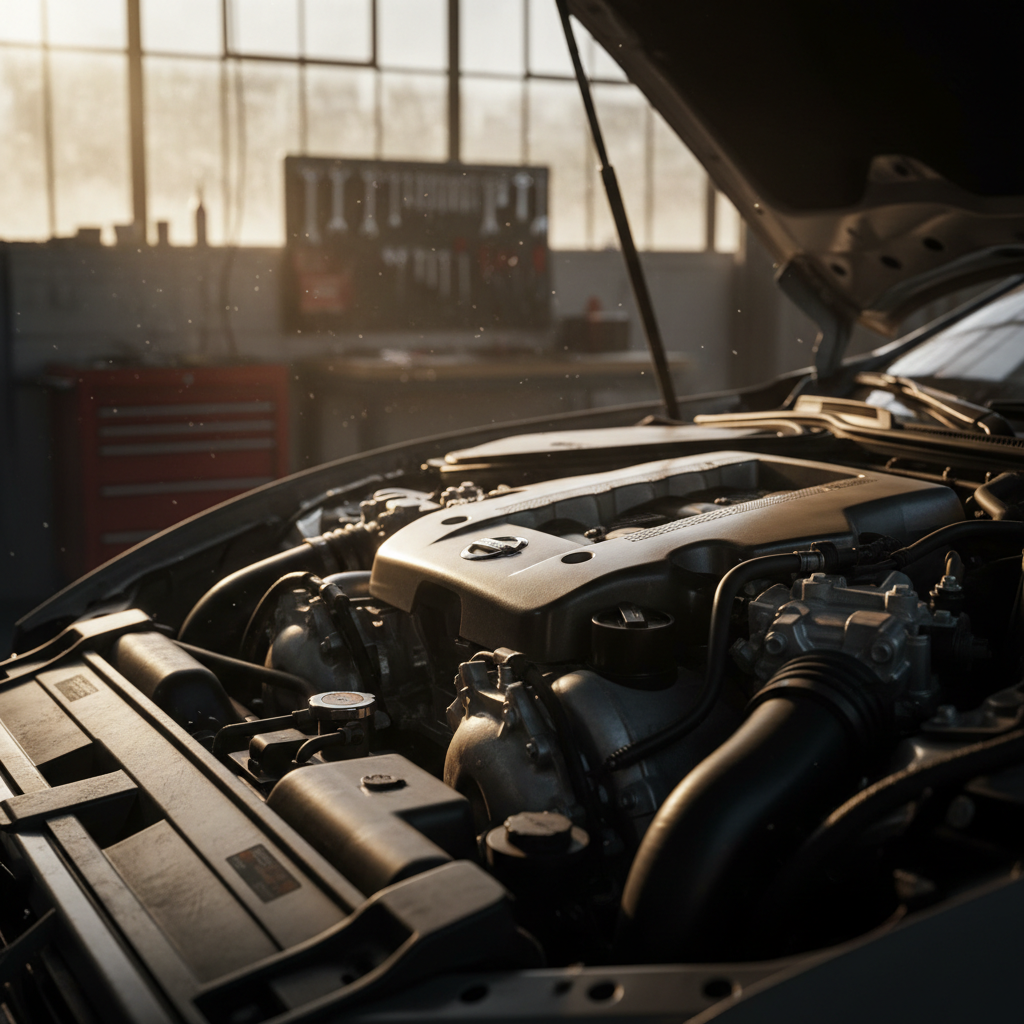
Why Your 370Z Tune Is Slowly Killing Your VQ37VHR Engine
Your 370Z’s VQ37VHR is bulletproof until it isn’t. Aggressive tunes are causing low-level knock events that fly under the radar, slowly destroying ringlands while your knock sensor reports everything looks fine. The threshold for audible knock is around 5-6 degrees of retard, but damage starts accumulating at 2-3 degrees, especially under sustained load.
Key Points:
- VQ37VHR engines suffer ringland damage from knock events as low as 2-3 degrees retard
- Most tuners only flag knock above 5 degrees, missing the subtle damage accumulation
- Intake temps above 50°C amplify knock sensitivity, even with proper octane
- Oil temps over 120°C reduce the engine’s knock threshold by 2-3 degrees
- E85 blends help, but poor fuel quality creates inconsistent knock margins
Knock retard: The ECU’s automatic timing reduction when detecting engine knock, measured in degrees of ignition timing pulled from the base map to prevent detonation damage.
What Knock Retard Actually Means in Your VQ37VHR
The VQ37VHR’s knock sensors are tuned conservatively from the factory. When you see 2-3 degrees of retard in your datalog, the ECU detected pressure spikes that indicate pre-detonation. Your tuner probably told you this is normal, especially if it’s not sustained. They’re wrong.
The issue is timing. Modern knock sensors detect the pressure wave after detonation starts. By the time your ECU pulls timing, some damage already occurred. On the VQ37VHR, the critical threshold isn’t the 5-6 degrees where you hear audible knock, it’s the 2-3 degrees where ringland stress begins accumulating. The factory ECU pulls timing aggressively because Nissan knows this.
Your aftermarket tune probably raised the knock threshold to chase power. Instead of pulling timing at the first sign of pressure spikes, it waits until knock becomes more severe. This gives you 15-20 more horsepower and kills your engine over 20,000 miles instead of immediately. Look at your datalog during pulls above 5,500 RPM. If you’re seeing any consistent timing retard, even 1-2 degrees, your tune is too aggressive for your current setup.
What Your Datalog Actually Shows You
Pull up your last dyno session or street datalog. Look at knock retard during your peak torque pull, usually 3,500-4,500 RPM on the VQ37VHR. If you’re seeing retard values above zero, even intermittently, you’re walking the line. Now check your intake air temps and oil temps during those same pulls.
Intake temps above 50°C turn your knock-limited engine into a ticking time bomb. The VQ37VHR’s aluminum block expands enough to change compression ratios slightly, and the hotter air charge ignites easier. Your ECU compensates by pulling timing, but aggressive tunes often have the knock sensitivity turned down. You’re seeing 1-2 degrees of retard when the stock ECU would pull 4-5 degrees.
Oil temps tell the bigger story. Above 120°C, your oil’s viscosity drops and bearing clearances increase. The engine becomes mechanically noisier, which confuses knock sensors. Worse, the hotter internal components change how combustion propagates. Your engine’s knock threshold effectively drops by 2-3 degrees. If your tune was borderline at 100°C oil temps, it’s destructive at 130°C.
Check your long-term fuel trims too. If they’re positive (adding fuel) above 10% during normal driving, your tune is compensating for something. Often it’s pulling fuel to prevent knock that the knock sensors aren’t catching. Your engine is running leaner than intended under boost, creating hot spots that pre-ignite.
How to Actually Protect Your VQ37VHR
First, get your cooling sorted. Your intake temps should never exceed 45°C during sustained pulls. If they do, you need a better intercooler or intake setup before chasing more power. Oil temps should stay below 110°C during track sessions. Install an oil cooler if you’re seeing higher temps consistently.
Second, be realistic about your fuel. Pump 91 octane varies by season and region. That tune your buddy runs on “premium” might be knock-limited on your local fuel. E85 helps enormously, but test your fuel. E85 can vary from E70 to E83 depending on the station and season. Your tune needs to account for the worst case, not the best.
Monitor your knock retard religiously. Any sustained retard above 1 degree during WOT pulls means your tune is too aggressive. Don’t accept “that’s normal for this platform.” The VQ37VHR responds well to conservative timing with proper fueling. You’ll lose maybe 10 horsepower and gain 50,000 miles of engine life.
Set up proper datalogging. Log knock retard, intake air temp, oil temp, and AFR on every pull. Review the data after each session. If you’re seeing patterns, like knock retard increasing with oil temps, your tune needs revision. Don’t wait until you’re pulling 5 degrees consistently.
What Happens When You Ignore the Signs
The VQ37VHR doesn’t fail catastrophically from knock. It dies slowly. Ringland failure starts with micro-fractures from repeated pressure spikes. Each low-level knock event that your ECU barely catches creates stress. Over thousands of cycles, the ringlands develop hairline cracks.
You’ll notice the symptoms gradually. Oil consumption increases first, maybe a quart every 3,000 miles instead of 5,000. Your compression numbers start dropping, usually cylinder 5 or 6 first on the VQ37VHR. By the time you’re burning a quart every 1,000 miles, the damage is done. Rebuilds start at 8,000 dollars with forged internals.
The cruel irony is that aggressive tunes don’t make dramatically more power. A properly conservative tune on the VQ37VHR makes 95% of the power with 300% of the reliability. Those extra 15 horsepower cost you 8,000 dollars and months of downtime. The math never works out.
Tuners who push limits do it because dyno numbers sell tunes. A conservative 280 whp VQ37VHR doesn’t get Instagram posts. A sketchy 310 whp tune gets shared in forums. Guess which one grenades engines and which one runs for 100,000 miles?
Frequently Asked Questions
How much knock retard is actually safe on a VQ37VHR?
Zero sustained knock retard is the goal. Occasional spikes of 1-2 degrees during aggressive driving are acceptable, but consistent retard above 1 degree indicates your tune is too aggressive. The VQ37VHR’s ringlands start accumulating stress at surprisingly low knock levels. If you’re seeing 3-4 degrees regularly, you’re causing damage even if the engine runs fine. Conservative tuning with proper fueling will make 95% of the power with dramatically better longevity.
What intake and oil temps cause knock issues on the 370Z?
Intake air temps above 50°C significantly increase knock sensitivity on the VQ37VHR. The aluminum block expansion and hotter air charge create conditions for pre-ignition. Oil temps above 120°C reduce the engine’s knock threshold by 2-3 degrees due to bearing clearance changes and increased internal noise that confuses knock sensors. Keep intake temps below 45°C and oil temps below 110°C for consistent performance. These limits become critical with aggressive tunes that have reduced knock sensitivity.
Why do 370Z engines fail from ringland damage instead of bearing failure?
The VQ37VHR’s bearing design is robust, but the ringland geometry creates stress concentration points under knock conditions. Each pressure spike from pre-detonation creates cyclic stress on the piston ring grooves. Unlike bearing damage which announces itself with noise, ringland cracks develop silently over thousands of cycles. The engine maintains normal oil pressure and doesn’t make noise until the cracks propagate enough to cause significant blow-by. This makes ringland failure particularly insidious because there’s no early warning system.
Is E85 worth it for preventing knock on aggressive 370Z tunes?
E85 provides substantial knock resistance, typically allowing 2-4 degrees more timing advance safely. However, fuel quality varies significantly by station and season, ranging from E70 to E83. Your tune must account for the worst-case scenario, not optimal conditions. E85 also requires larger injectors and fuel system modifications. While it helps with knock resistance, it’s not a cure-all for aggressive tuning. Proper cooling, conservative timing maps, and consistent fuel quality monitoring remain essential even with ethanol blends.
The VQ37VHR is a solid platform when tuned properly. Respect its limits, monitor your data religiously, and you’ll have a reliable performance engine for years. Chase every last horsepower without proper monitoring, and you’ll be shopping for short blocks sooner than you think. TorqueMetrics helps you spot these issues before they become expensive problems.