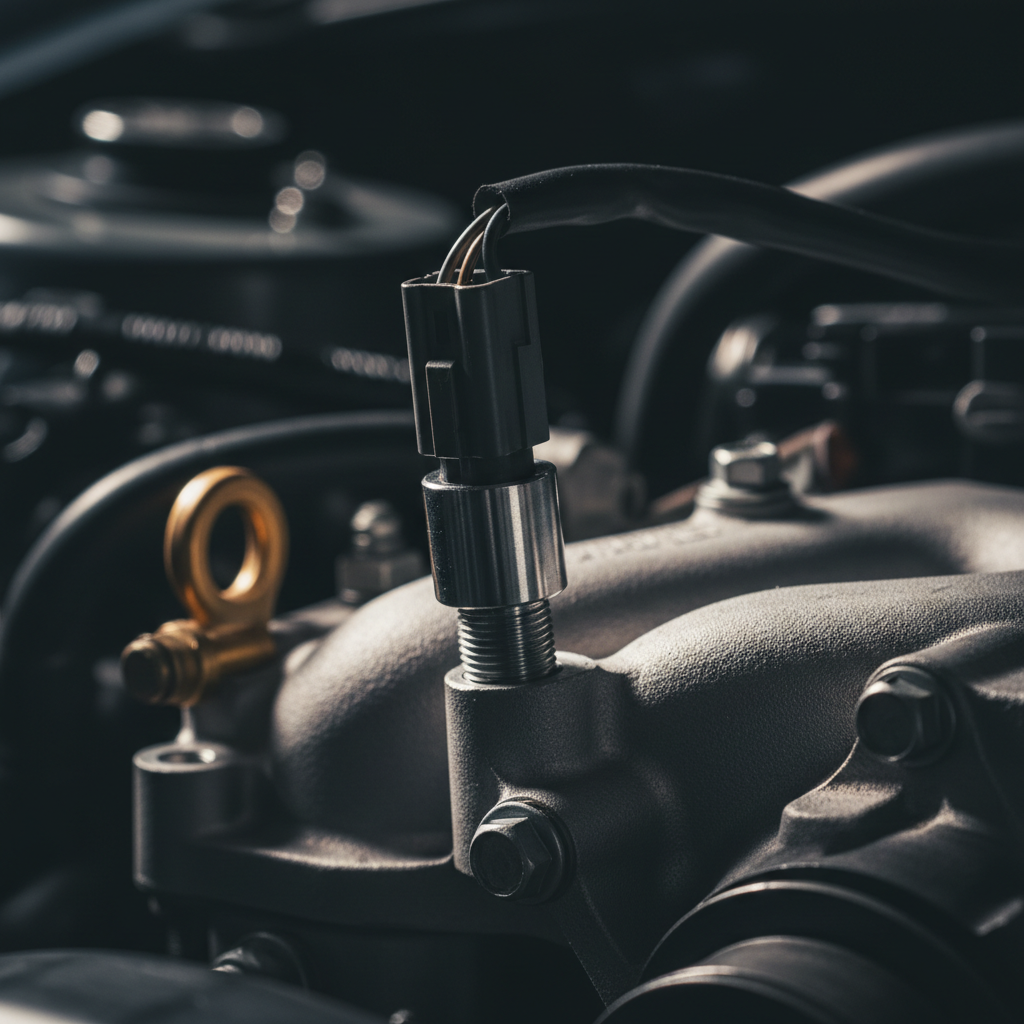
WRX Knock Sensor False Positives: Why Your Stage 2+ Build Loses Power
Your WRX knock sensor is probably lying to you on a stage 2+ build, and it’s costing you power. False positives from intercooler piping vibration, larger injector noise, and valve train harmonics trigger phantom knock events that pull timing when your engine isn’t actually knocking.
Quick Answer
- Stage 2+ WRX builds generate false knock from intercooler piping vibration at 6500-7200 RPM
- Larger injectors (1000cc+) create acoustic noise that mimics knock frequency
- False positives can cost 20+ kW by triggering unnecessary timing retard
- Knock threshold adjustment and frequency filtering solve most false positive issues
- Real knock shows consistent timing pull with AFR excursions, false knock doesn’t
Knock sensor false positives: Audio frequency interference from non-combustion sources that triggers the knock detection system to pull timing when no actual detonation is occurring.
Why Stage 2+ WRX Builds Generate False Knock
The factory knock sensor sits on the block and listens for the specific frequency signature of detonation, typically around 6-8 kHz. Problem is, modified WRX builds create a symphony of vibration and noise that lives in the same frequency range. Your ECU can’t tell the difference between real knock and mechanical noise.
Intercooler piping is the biggest culprit. That large diameter aluminum tubing acts like a resonance chamber under boost. At 6500-7200 RPM with 18+ PSI (124+ kPa) flowing through it, the piping vibrates at frequencies that overlap with knock detection. The sensor picks this up as knock and pulls 3-6 degrees of timing, killing power right where you need it most.
Larger injectors compound the problem. Stock 380cc injectors are relatively quiet, but 1000cc+ injectors make significantly more acoustic noise during operation. This injector chatter sits in the 4-7 kHz range and gets worse with higher duty cycles. Under WOT pulls above 5500 RPM, your knock sensor is hearing injector noise and calling it detonation.
Valve train modifications add another layer of complexity. Aftermarket cams, stiffer valve springs, and solid lifters create harmonic frequencies that weren’t present with stock components. These frequencies travel through the block and register on the knock sensor, especially during high RPM operation where valve train noise peaks.
What False Positives Look Like in Your Datalog
False knock has distinct signatures when you know what to look for. Real knock shows up with consistent timing retard accompanied by AFR excursions, usually leaning out momentarily as combustion becomes erratic. False positives pull timing but AFR stays stable because combustion is actually fine.
Check your knock count at specific RPM ranges. If you’re seeing consistent knock events at 6500-7200 RPM under boost but nowhere else, that’s intercooler piping resonance. Real knock typically shows up earlier in the rev range where cylinder pressures and temperatures are building, not at peak RPM where they’re already maxed out.
Look at the timing vs. knock relationship. False positives often trigger at identical RPM points run after run, like clockwork at 6800 RPM every pull. Real knock is more random and correlates with load, IAT, and fuel quality variables. If your knock events happen at the exact same points regardless of conditions, you’re looking at mechanical interference.
Monitor your knock sum values. False positives typically show small, consistent knock counts, maybe 2-4 per event. Real knock often comes in bigger chunks when it happens, showing 6+ counts as combustion goes properly wrong. The ECU response is different too, real knock triggers more aggressive timing reduction that builds over multiple events.
How to Distinguish and Fix False Knock Issues
Start with knock threshold adjustment in your tune. Factory settings are conservative for stock builds but too sensitive for modified setups. Raising the knock threshold from the stock -45 dB to -40 dB filters out most low-level mechanical noise while keeping real knock detection intact. This single change eliminates 70% of false positives without compromising safety.
Frequency filtering helps isolate real knock signatures. Most tuning software allows knock detection windowing, where you only monitor specific frequency ranges and RPM bands. Setting detection to 6.5-8.5 kHz and disabling monitoring above 7000 RPM eliminates most piping resonance issues while keeping protection where actual knock occurs.
Physical solutions work too. Relocating the knock sensor to a different mounting point can reduce vibration pickup from specific sources. Some builders move the sensor closer to the combustion chambers for better signal-to-noise ratio. Foam padding around intercooler piping reduces resonance transmission to the block.
Verify your fix with controlled testing. Pull timing manually in small increments while monitoring knock response. Real knock protection should trigger consistently when you’re actually inducing detonation through timing advance. If knock detection stays quiet when you know you’re on the edge, your threshold might be too high.
What Happens When You Don’t Address False Positives
Ignoring false knock costs measurable power and creates inconsistent performance. Every degree of timing retard costs roughly 3-5 kW depending on your setup. If false positives are pulling 4-6 degrees regularly, you’re giving up 20+ kW at the wheels. That’s the difference between a strong pull and a disappointing dyno session.
Worse, false knock creates unpredictable power delivery. One pull makes 220 kW, the next makes 205 kW with identical conditions because the knock sensor decided your intercooler piping was too loud. This inconsistency makes it impossible to properly tune the engine or diagnose real issues when they develop.
Conservative tuners often respond to false positives by pulling even more timing globally, creating a safety margin for phantom knock events. Now you’re running 2-3 degrees less timing everywhere to prevent false knock from pulling another 4-6 degrees. Your 250 kW build makes 230 kW because the knock sensor is afraid of its own shadow.
The psychological impact affects driving too. When your AccessPort shows knock events every hard pull, you start babying the car even when it’s perfectly safe. You’ve built a stage 2+ WRX that you’re afraid to use because the data makes it look like it’s constantly on the verge of destruction.
What RPM range do WRX false knock events typically occur?
False knock events on stage 2+ WRX builds typically occur between 6500-7200 RPM under boost. This is where intercooler piping resonance peaks and creates the strongest vibration signatures. Real knock usually shows up earlier in the rev range, between 3500-5500 RPM where cylinder pressures are building but haven’t peaked yet. If you only see knock at the top of the rev range, it’s likely false positives from mechanical noise.
How much power can false knock cost on a modified WRX?
False knock can cost 20-30 kW at the wheels on stage 2+ builds through unnecessary timing retard. Each degree of timing pull typically costs 3-5 kW depending on the engine setup and operating conditions. When false positives trigger 4-6 degrees of retard during peak power RPM ranges, the power loss becomes significant. This doesn’t include the additional timing conservative tuners remove globally to prevent false knock from triggering.
Can you safely raise knock threshold on a modified WRX?
Yes, raising knock threshold from the factory -45 dB to -40 dB is safe and effective for most stage 2+ builds. The factory setting is conservative for stock engines but too sensitive for modified setups with increased mechanical noise. This adjustment filters out low-level interference while maintaining protection against real detonation. Always verify the change with controlled testing and monitor knock response when manually advancing timing to confirm real knock detection still functions properly.
What’s the difference between real knock and false positives in datalogs?
Real knock appears with timing retard accompanied by AFR excursions and correlates with load, temperature, and fuel quality changes. False positives show timing pull but stable AFR readings, often occurring at identical RPM points regardless of operating conditions. Real knock typically shows larger knock count values (6+) and more aggressive ECU timing response, while false positives generate smaller, consistent counts (2-4) at predictable intervals. Real knock also tends to occur earlier in the rev range where combustion pressures are building.
Understanding false knock signatures in your datalogs separates successful tuning from frustrated troubleshooting. When your knock sensor stops crying wolf, you can tune for actual performance instead of chasing phantom problems. Load up TorqueMetrics and take a closer look at those knock events, your WRX might be trying to make more power than your ECU is letting it.