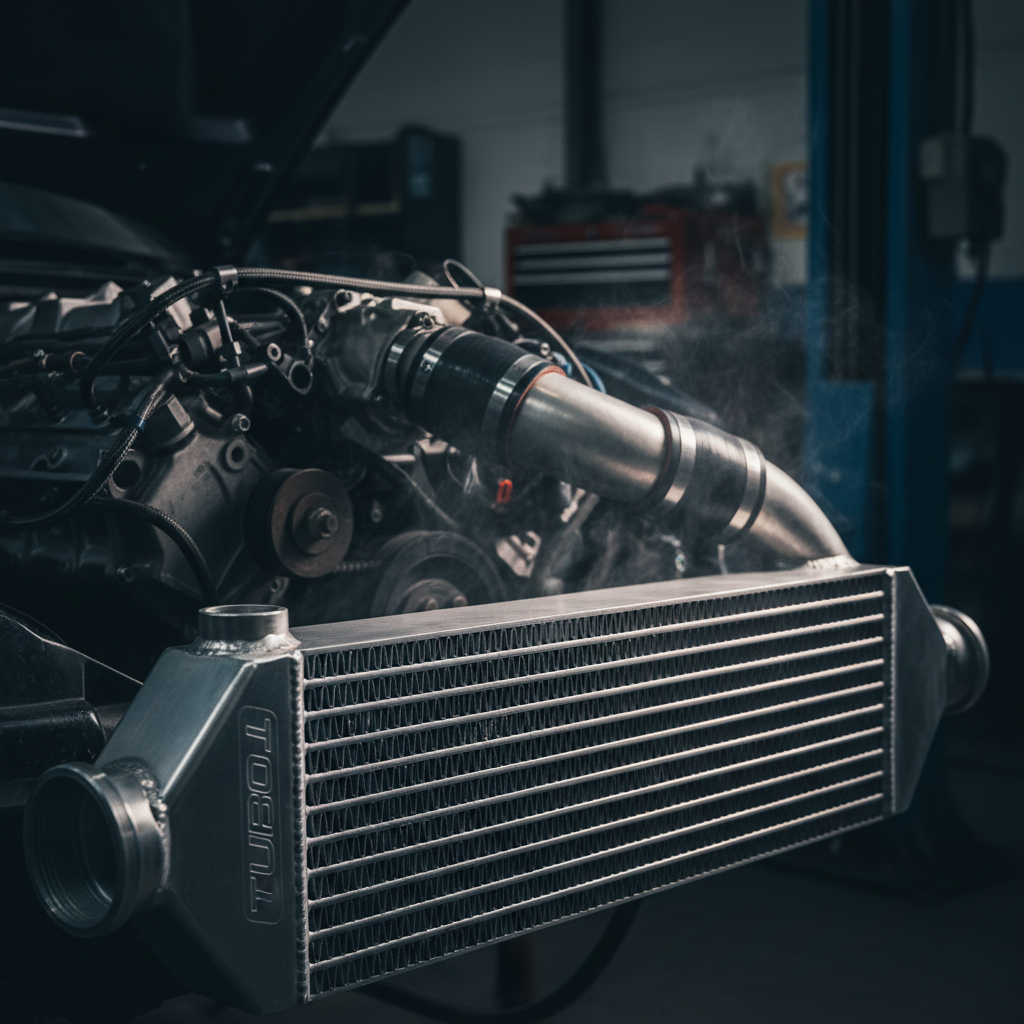
Why Your Intercooler Loses 40hp After Three Pulls (GTI/Si Data)
Your intercooler efficiency drops 30-40% after heat soak sets in, and most people never see it coming because they only look at peak numbers from the first pull. Real-world GTI and Civic Si builds routinely lose 40-50hp between the first dyno pull and the third, with intake air temps climbing 35-45°C in just minutes of hard driving.
- Heat soak reduces intercooler efficiency by 30-40% after 2-3 hard pulls
- IAT temps climb 35-45°C between pulls on stock intercoolers (GTI/Si)
- Power drops 40-50hp consistently once heat soak sets in
- Upgraded intercoolers maintain 85-90% efficiency vs 60-65% for stock units
- Core volume and airflow matter more than peak cooling capacity
Heat soak: The point where your intercooler can no longer effectively remove heat from compressed air faster than it’s being generated, causing intake air temperatures to climb and power to drop consistently.
What Heat Soak Actually Does to Your Power
Heat soak isn’t some gradual performance degradation you might not notice. It’s a cliff. Your Golf GTI makes 340hp on the first pull, 320hp on the second, and 300hp on the third. Your Civic Si drops from 280hp to 245hp in the same sequence. The ECU sees climbing intake air temps and pulls timing aggressively to prevent knock.
Stock intercoolers on both platforms are sized for OEM power levels, not the 50-80% power increases most people are chasing. The MK7 GTI’s stock intercooler starts losing efficiency around 280-300hp. The 10th gen Civic Si hits its wall even earlier, around 250-260hp. Push beyond those numbers and you’re not just losing peak power, you’re losing consistency.
The data tells the real story. On a stock GTI intercooler at 22 PSI (152 kPa) of boost, intake air temps climb from 35°C on the first pull to 75-80°C by the third pull on the same day. That 45°C increase costs you 8-12 degrees of timing advance, which translates directly to 40-50hp at the wheels. The Civic Si shows similar patterns, though the smaller turbo means slightly lower absolute temp swings.
What Your Datalog Actually Shows During Heat Soak
When you pull logs during heat soak, you’ll see three telltale signs. First, your intake air temps climb steadily throughout each pull, not just between them. A healthy intercooler should hold IAT within 10-15°C of ambient during a full pull. When heat soak sets in, you’ll see IAT climbing 20-30°C during a single fourth gear pull.
Second, knock retard becomes your enemy. The ECU sees those climbing temps and starts pulling timing preemptively. On the MK7 GTI, you’ll see 2-3 degrees of timing pull in the mid-range, climbing to 6-8 degrees up top. The Civic Si is even more aggressive, pulling 4-6 degrees across the entire powerband once IAT hits 70°C. That timing pull is power you’re leaving on the table.
Third, your boost curve changes. The ECU reduces boost target to manage cylinder temperatures when intake temps climb. You’ll log 20 PSI (138 kPa) on the first pull, but only 17-18 PSI (117-124 kPa) by the fourth pull on the same tune. The car is protecting itself, but you’re losing the power you tuned for.
How to Choose an Intercooler That Actually Works
Core volume matters more than most people realize. The popular bar-and-plate intercoolers look impressive but often have less internal volume than a well-designed tube-and-fin setup. For GTI builds targeting 350-400hp, you need 1.2-1.5 times the stock core volume minimum. Civic Si builds can get away with slightly less, but 1.1-1.3x stock volume is still the target.
Airflow through the core is everything. A massive intercooler that blocks half your radiator will heat soak just as badly as the stock unit, just at higher power levels. The best intercoolers for these platforms maintain good airflow to the radiator while increasing frontal area by 40-60%. More frontal area means more ambient air moving through the core, which is what actually removes the heat.
End tank design separates good intercoolers from great ones. Large, smooth end tanks distribute airflow evenly across the entire core. Cheap intercoolers with small end tanks create hot spots where airflow stagnates, reducing effective core volume by 20-30%. You’ll see this in your logs as inconsistent IAT readings that jump around during steady-state pulls.
What Goes Wrong When You Ignore Heat Soak
The biggest mistake is tuning based on first-pull numbers. Your tuner sees 380hp on the dyno and calls it done, but that tune becomes a 320hp tune once heat soak sets in during real driving. You end up with a car that feels fast for the first few minutes of spirited driving, then falls flat when you actually need the power.
Track day warriors learn this lesson the hard way. Your GTI feels strong leaving the paddock, but by lap three you’re getting walked by cars making 50hp less on paper. Heat soak doesn’t care about your dyno sheet. It cares about thermal management, and most people completely ignore it until they’re getting passed on track.
The other common mistake is assuming bigger is always better. Massive intercoolers add weight, block airflow to other heat exchangers, and often have poor end tank designs that hurt efficiency. A properly sized intercooler that maintains 85% efficiency under heat soak will outperform a massive unit that drops to 60% efficiency every single time.
Frequently Asked Questions
How much power will I lose to heat soak on a stock intercooler?
On modified GTI and Civic Si builds, expect to lose 15-20% of peak power once heat soak sets in. A GTI making 340hp on the first pull will typically drop to 270-290hp consistently after heat soak. Civic Si builds show similar percentage losses, though from lower absolute numbers. The higher your power level above stock, the more dramatic the drop becomes.
Can I prevent heat soak without upgrading the intercooler?
Not really. You can delay it slightly with water-meth injection or by running richer AFRs, but you’re treating symptoms rather than the root cause. Lower boost levels will reduce heat generation, but then you’re giving up the power you modified the car for. The only real solution is more intercooler capacity and better thermal management.
How do I know if my intercooler upgrade is actually working?
Log intake air temps during back-to-back pulls. A good intercooler should hold IAT within 20-25°C of ambient even on the fourth or fifth consecutive pull. If you’re seeing IAT climb above 60°C during pulls, or climbing more than 15°C between pulls, your intercooler is still the limiting factor. Consistent timing advance and stable boost levels across multiple pulls are the other key indicators.
Do front-mount intercoolers always work better than top-mount?
On the GTI, yes, because the top-mount location gets heat soaked from the engine bay. On the Civic Si, the factory top-mount location actually works well if you upgrade to a larger unit with better airflow. The key is ambient air access and sufficient core volume, not necessarily the mounting location. Front-mount setups generally have more space for larger cores and better ambient airflow.
Heat soak separates the cars that look fast on paper from the ones that are actually fast when it matters. Your intercooler choice determines whether you’re making peak power for one pull or consistent power when you’re actually driving hard. Track your intake air temps, watch for timing pull, and upgrade before heat soak starts costing you the power you paid for. TorqueMetrics makes it easy to spot these patterns in your datalogs and tune for consistency, not just peak numbers.