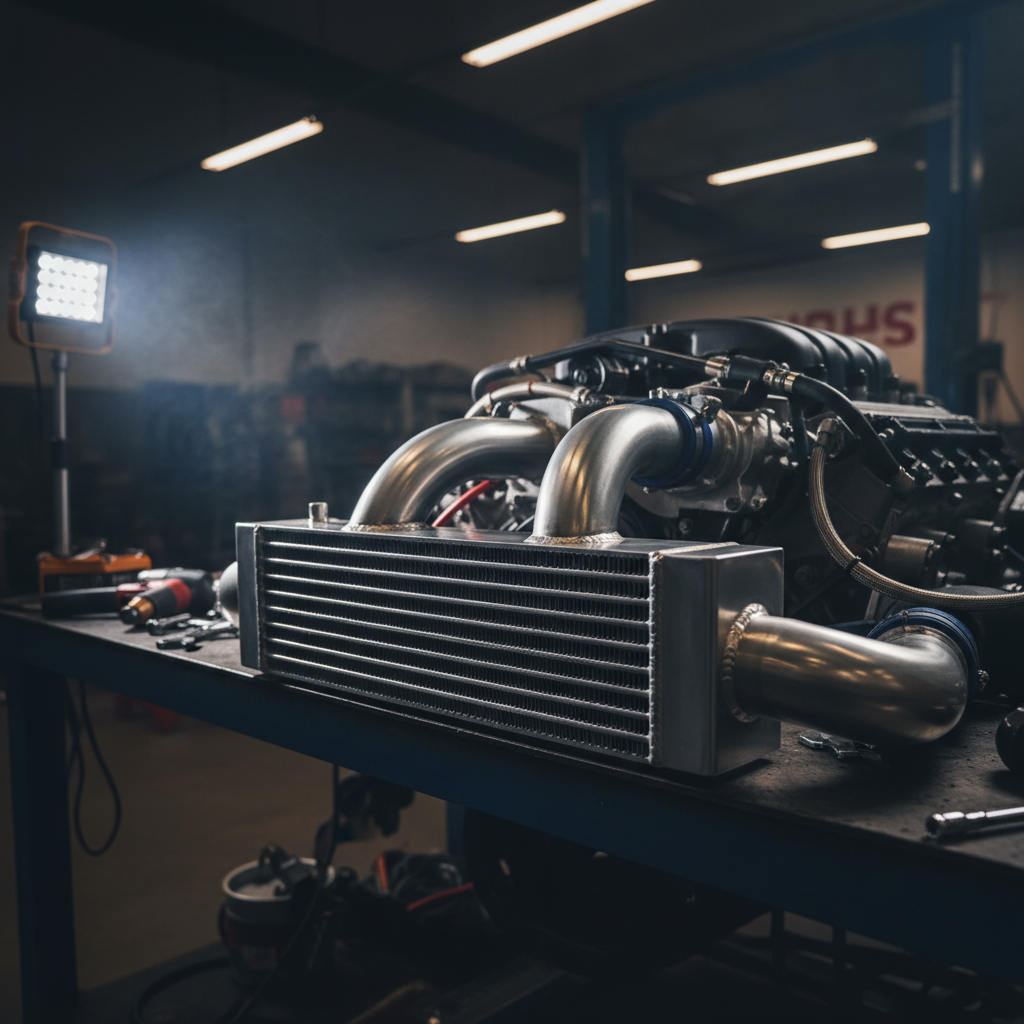
Why Did My Intercooler Upgrade Kill Power? Stage 2 Tuning Fix
Your Stage 2 build just lost 15-20 horsepower after upgrading to that massive front-mount intercooler. The dyno numbers don’t lie, and you’re wondering if you got sold a bad part. Here’s the reality: your intercooler is working exactly as designed. Your tune just hasn’t caught up to the new thermal dynamics.
Quick Answer
- Bigger intercoolers drop intake temps 8-11°C, increasing air density by 2-3%
- Your ECU expects warmer air from the old setup, creating lean AFR conditions
- Conservative timing maps for higher temps now leave power on the table
- Pressure drop from larger core can reduce effective boost by 0.5-1.0 PSI
- A retune optimized for new temps typically gains 10-25 horsepower over baseline
Intercooler efficiency mismatch: When your new intercooler drops intake air temperatures significantly below what your tune expects, the ECU continues running fuel and timing maps calibrated for warmer, less dense air conditions.
What Really Happens When You Drop Intake Temps
Your factory intercooler was heat-soaking at 65-70°C under sustained load. That new front-mount is holding steady at 52-57°C in the same conditions. Sounds great, except your tune was calibrated for those higher temps.
Colder air is denser air. Every degree you drop intake temps increases air density by roughly 0.3%. Drop temps by 15°C and you’ve got 4-5% more oxygen molecules entering each cylinder. Your fuel maps are still delivering the same quantity of fuel they did for the warmer, less dense charge.
The result shows up immediately in your AFR readings. Where you were seeing 11.8-12.2 AFR under full boost with the old setup, you’re now hitting 12.4-12.8 AFR in the same load cells. That’s not a fueling problem, it’s physics. Your injectors are flowing the same amount, but the air side of the equation changed.
Meanwhile, your timing maps are equally mismatched. The ECU is pulling 2-3 degrees of timing based on the higher intake temps it expects to see. With cooler, denser air, you could safely run 4-6 degrees more advance than you currently are. That conservative timing is costing you torque across the entire powerband.
What Your Datalog Actually Shows
Pull a log comparing before and after the intercooler swap. The story writes itself in the data. Intake air temps under boost dropped from 68-72°C to 54-58°C. Boost pressure might have dropped 0.5-1.0 PSI due to the pressure differential across the larger core. AFR went lean by 0.4-0.6 points in the high load cells.
Here’s the kicker: your knock counts probably dropped to near zero. That cooler, denser air charge is far more resistant to detonation than what you had before. But your timing maps don’t know that. They’re still running the conservative advance calibrated for much hotter conditions.
Look at your calculated load values. They’ll be 8-12% higher in the same RPM ranges where you previously hit peak torque. More air per cylinder means higher load calculations, but your fuel delivery hasn’t scaled to match. The ECU is essentially running a lean condition in cells where it never had to before.
Your turbo is also working slightly harder to overcome the increased pressure drop across the larger intercooler core. Depending on the size difference, you might see 0.3-0.8 PSI less manifold pressure for the same duty cycle. Not huge, but it adds up when combined with the timing and fueling mismatches.
How to Fix the Tune for Your New Intercooler
The solution isn’t complicated, but it requires actual tuning work. You need fuel and timing maps calibrated for your new thermal baseline. Start with the fuel maps in high load cells. Where you’re seeing 12.5-12.8 AFR now, target 11.2-11.6 AFR for pump gas, or 10.8-11.2 AFR if you’re running E85.
Timing adjustments are where you’ll find the real power gains. With intake temps consistently 12-15°C lower, you can safely add 3-5 degrees of advance in the cells where you make peak torque. Start conservative, add 2 degrees, log for knock, then continue advancing until you find the edge.
Don’t forget to recalibrate your boost targets. If the new intercooler is costing you 0.5-1.0 PSI of manifold pressure, bump your wastegate duty cycle to compensate. You want the same pressure ratio as before, just with much cooler air temps.
Consider adjusting your IAT correction factors too. Most tunes apply timing pull as intake temps climb. With your new baseline 15°C cooler, those correction tables are activating later and pulling less timing overall. That’s free power if you tune for it properly.
What Happens When You Ignore the Data
Run the new intercooler on the old tune long enough, and you’ll develop some expensive habits. Those lean AFR conditions under sustained load will eventually burn down pistons or exhaust valves. E85 gives you more margin, but pump gas at 12.6-12.8 AFR under 20+ PSI boost is gambling with engine internals.
The conservative timing costs you more than just peak power. Your torque curve flattens out, especially in the mid-range where you actually drive the car. You’ll lose that punch coming out of corners or accelerating from highway speeds. The engine feels lazy despite flowing more air than it ever has.
Some people try to compensate by cranking boost higher, thinking more pressure equals more power. All they accomplish is making the AFR problem worse and creating more heat that the intercooler now has to reject. You end up with higher intake temps than necessary and still-conservative timing. It’s the worst of both worlds.
The turbo starts working overtime to hit those higher boost targets against increased pressure drop. Compressor efficiency drops, exhaust gas temps climb, and you’re back to heat-soaking despite having triple the intercooler capacity. The data always tells the real story.
FAQ
How much power can I gain by retuning after an intercooler upgrade?
Expect 10-25 horsepower gains over your pre-intercooler baseline, depending on how conservative your current timing maps are. The power comes from optimizing fuel delivery for the denser air charge and advancing timing to take advantage of the cooler intake temps. Cars that were previously timing-limited due to heat will see the biggest improvements, while builds with adequate cooling see smaller but still meaningful gains.
Can a bigger intercooler actually hurt performance?
Yes, temporarily. Larger intercoolers create more pressure drop, reducing effective boost pressure by 0.5-1.5 PSI depending on core size and design. Without retuning, you lose the boost pressure but don’t gain the timing and fueling advantages of cooler air. The net result is often a 10-20 horsepower loss until the tune is optimized for the new setup.
Why did my AFR go lean after installing a front-mount intercooler?
Cooler air is denser air, packing more oxygen molecules into each cylinder. Your fuel injectors deliver the same quantity of fuel, but now there’s 3-5% more air in the combustion chamber. This shifts your air-fuel ratio lean by 0.4-0.8 points in high load cells. It’s not a fueling system problem, it’s the physics of temperature and air density requiring a tune adjustment.
How do I know if my intercooler upgrade needs a retune?
Log your intake air temperatures and AFR under boost. If temps dropped more than 8-10°C from your previous setup and AFR readings went leaner by more than 0.3-0.4 points, you need tuning adjustments. Also watch for reduced boost pressure readings, knock counts near zero where you used to see occasional activity, and overall power loss despite better cooling.
The right intercooler upgrade with proper tuning support transforms how your engine responds under load. Your datalogs become cleaner, intake temps stay consistent, and you finally extract the power that was always hiding behind thermal limitations. TorqueMetrics makes it easy to overlay before and after logs to see exactly how your modifications affected performance across the entire operating range.