Why Stock Boost Controllers Leave 40+ HP Hidden in Your Type R
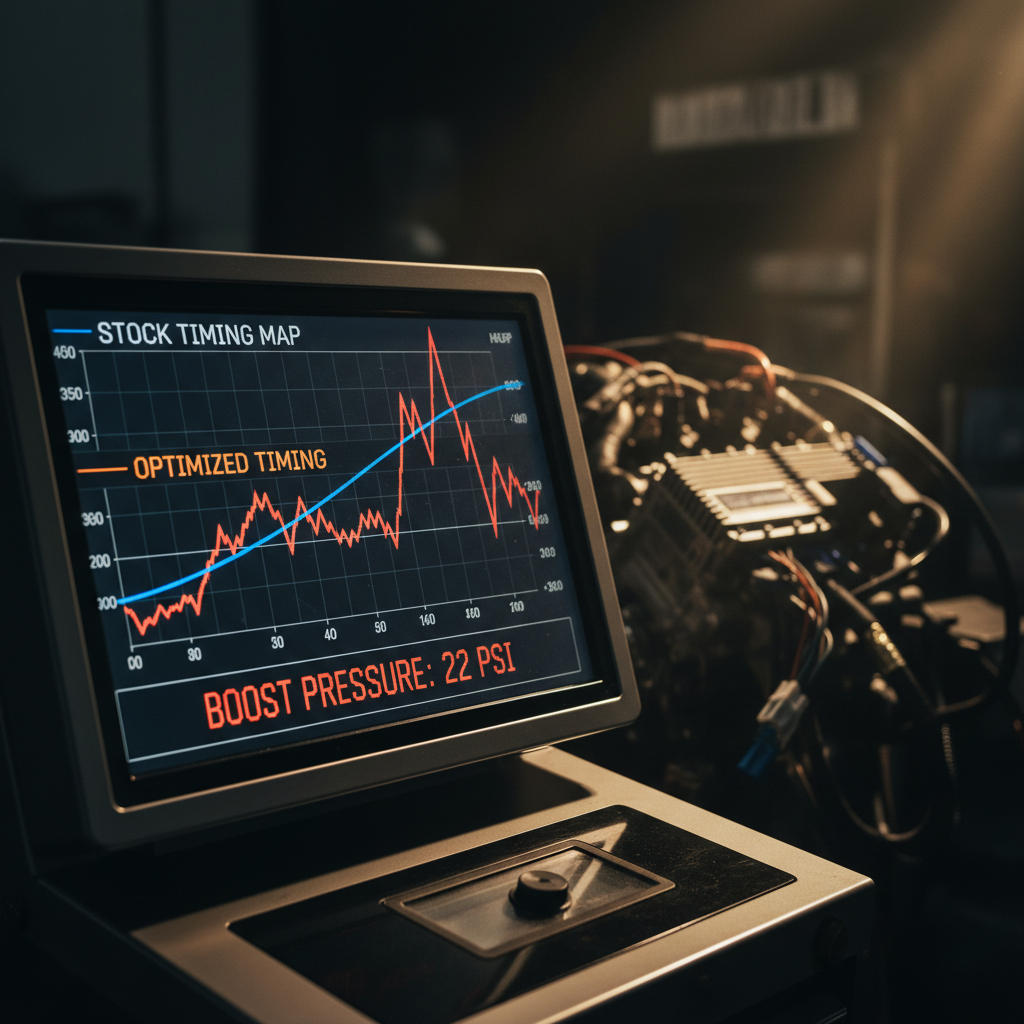
Stock boost controllers aren’t your bottleneck, ignition timing is. Recent dyno comparisons between Civic Type R and Golf R owners show identical 22 PSI (152 kPa) boost curves but 40+ horsepower differences based purely on ignition timing advance. The hardware delivers the boost perfectly, but conservative factory timing maps leave power buried in every pull.
- Stock boost controllers achieve target 22 PSI (152 kPa) with minimal deviation on both platforms
- Ignition timing differences account for 40-55 hp gaps between stock and optimized maps
- Factory timing pulls 4-8 degrees under boost compared to what the hardware can safely handle
- Intake air temperatures below 40°C allow significantly more aggressive timing than factory maps use
- Peak torque gains happen between 3000-4500 RPM where timing advancement has maximum impact
Conservative ignition timing: Factory ECU programming that retards spark timing well below the engine’s knock threshold to account for varying fuel quality, environmental conditions, and component tolerances across global markets.
What Stock Boost Control Actually Delivers
The data from recent Type R versus Golf R dyno sessions tells a clear story. Both platforms hit 22 PSI (152 kPa) peak boost with remarkable consistency. The Type R maintains 21.8-22.2 PSI from 3500 to 6000 RPM. The Golf R holds 21.5-22.1 PSI across the same range. Boost control isn’t the limiting factor here.
What changes everything is ignition timing advance. Stock Type R maps run 18-22 degrees of timing under full boost. Optimized maps safely push 26-30 degrees with identical boost pressure and fuel delivery. That 6-8 degree difference translates directly to the 40+ horsepower gap everyone sees on the dyno.
The Golf R shows similar patterns but with different baseline timing. Stock maps use 16-20 degrees under boost, while optimized versions run 24-28 degrees. Same boost pressure, same airflow, dramatically different power output. The boost controller delivers exactly what the ECU requests, but the ECU requests far less timing than the engine can handle.
Where the Hidden Horsepower Lives in Your Data
Pull your logs and look at ignition timing advance during your peak torque RPM range. Between 3000-4500 RPM, you’ll see the biggest timing differences between stock and optimized maps. This is where maximum torque multiplication happens, and where conservative timing costs the most power.
Stock Type R timing at 4000 RPM under 22 PSI boost typically shows 19-21 degrees advance. Knock sensors remain quiet, intake air temperatures stay below 38°C, and fuel trims hold steady. The engine begs for more timing, but the factory map won’t deliver it. Optimized maps push 27-29 degrees at the same conditions with zero knock retard.
The Golf R pattern mirrors this but shifted lower. Peak gains happen between 2800-4200 RPM where the factory timing map leaves 5-7 degrees on the table. Logs consistently show intake temperatures below 35°C, knock counts at zero, and AFR holding 10.9-11.1 under full boost. Every indicator says the engine can handle more timing, but stock programming won’t use it.
Boost pressure remains identical across both scenarios. The wastegate actuator, boost control solenoid, and ECU work perfectly together to hit target pressure. The limitation isn’t mechanical, it’s software-based conservative programming designed for worst-case scenarios that most enthusiasts never encounter.
How to Extract the Hidden Power Safely
Start with your current logs. Verify your knock sensors read zero retard under full boost, intake air temperatures stay below 40°C, and fuel trims remain stable. If those conditions hold, you have room to advance timing. Professional tuning typically adds 2-3 degrees initially, monitors for knock, then increases gradually.
The Type R responds well to timing advances in 2-degree increments up to 28-30 degrees total advance under boost. Monitor knock sensors constantly. Any consistent knock retard above 1-2 degrees means you’ve found the limit. Back off 1-2 degrees and verify stability across multiple pulls.
Golf R engines typically max out around 26-28 degrees advance under similar conditions. The smaller displacement makes them slightly more sensitive to timing changes, but the power gains follow the same pattern. Most see 35-45 horsepower increases with proper timing optimization while maintaining stock boost levels.
Focus your efforts on the 3000-5000 RPM range where timing changes deliver maximum impact. Higher RPM ranges see diminishing returns from timing advance, while lower RPM ranges rarely need significant changes from factory settings. This is where your dyno curves will show the biggest separation from stock.
Common Mistakes That Kill Engines
Adding boost without optimizing timing first wastes money and stresses components unnecessarily. Many enthusiasts chase higher boost numbers when their stock boost controller already delivers adequate pressure. The real limitation sits in ignition timing maps, not boost control hardware.
Running aggressive timing maps without proper knock monitoring destroys engines quickly. Knock sensors provide real-time feedback about timing limits. Ignore them and you’ll rebuild your motor. The Type R’s knock sensors are particularly sensitive and reliable, use that data to stay safe.
Copying timing maps from other builds without understanding your specific conditions causes problems. Altitude, fuel quality, intake modifications, and intercooler efficiency all affect timing limits. What works at sea level on 93 octane might cause knock at 3000 feet elevation. Log your specific conditions and tune accordingly.
Assuming higher octane fuel automatically allows more timing leads to disappointment. The difference between 91 and 93 octane typically allows 1-2 degrees additional advance, not the 5-6 degrees many expect. E85 opens significantly more timing potential, but requires corresponding fuel system upgrades.
Frequently Asked Questions
How much horsepower can I gain from timing optimization alone on a stock Type R?
Most stock Civic Type R engines gain 40-55 horsepower with proper ignition timing optimization while maintaining factory boost levels. The gains concentrate in the 3000-5000 RPM range where timing advance has maximum impact. You’ll see peak torque increases of 35-50 lb-ft with proper tuning. These numbers assume good fuel quality, proper intake air temperatures, and zero knock retard under the optimized timing map.
Why do factory timing maps leave so much power on the table?
Manufacturers design timing maps for worst-case scenarios across global markets with varying fuel quality, environmental conditions, and component tolerances. A Type R sold in Arizona running 87 octane at 115°F ambient temperature must not knock, so Honda programs conservatively. This same conservative timing runs safely but inefficiently in better conditions. Professional tuning optimizes timing for your specific fuel, climate, and modifications.
Can I damage my engine by advancing timing too aggressively?
Yes, excessive timing advance causes detonation that destroys pistons, rings, and bearings rapidly. Always monitor knock sensors and advance timing gradually in 1-2 degree increments. Any consistent knock retard above 2 degrees indicates you’ve exceeded safe limits. Professional tuning equipment and experience prevents costly mistakes that backyard tuning often creates.
Do Golf R and Type R engines respond similarly to timing changes?
Both engines show similar power gains from timing optimization but reach different maximum advance values. The Type R typically handles 28-30 degrees under boost while the Golf R maxes around 26-28 degrees. Both platforms gain 40-50+ horsepower with proper timing optimization. The Golf R shows slightly more sensitivity to timing changes due to its smaller displacement and higher specific output.
Your boost controller works fine. Your ignition timing doesn’t. Professional tuning unlocks the power your engine already makes but conservative factory programming won’t access. TorqueMetrics helps you analyze the timing and knock data that reveals where your hidden horsepower lives.