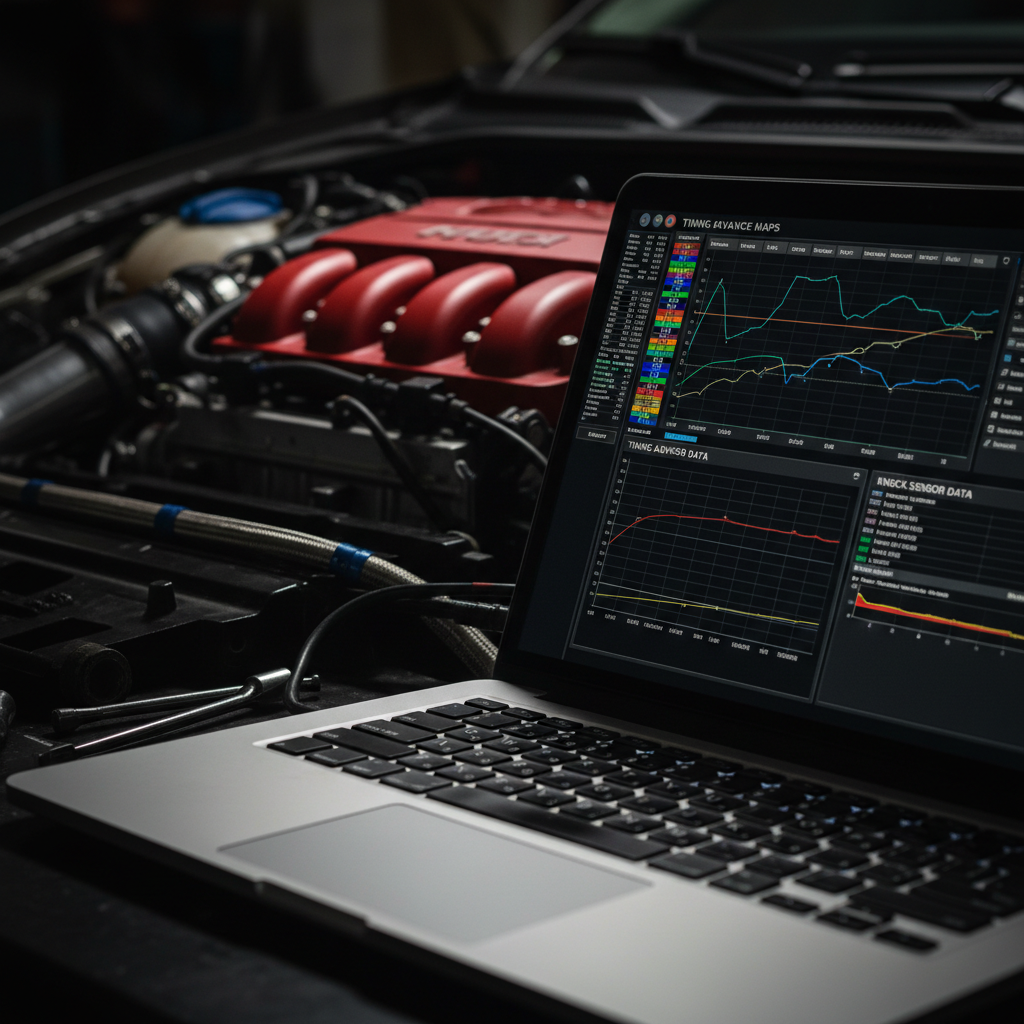
Why Stock ECU Maps Hold Back Your Golf GTI’s True Potential
Stock Golf GTI ECUs pull timing aggressively under load, often choking 80-100hp from modified cars running full bolt-ons. The factory maps prioritize reliability over performance, using conservative timing curves and hair-trigger knock detection that treats intake noise as detonation.
Key Takeaways:
- Stock GTI ECUs pull 8-12° of timing under load, even without real knock
- Conservative knock detection interprets intake noise as detonation
- Factory fuel maps run rich (10.2-10.5 AFR) leaving power on the table
- Timing limitation becomes severe above 18 PSI (124 kPa) boost
- Aftermarket ECUs can unlock 80-100hp with proper calibration
ECU timing limitation: The maximum timing advance your engine control unit will allow under specific load and RPM conditions, regardless of knock sensor feedback or fuel quality.
What Stock ECU Maps Actually Prioritize
Volkswagen builds GTI ECU maps for 87 octane pump gas and 150,000-mile warranty claims. Your stock computer assumes worst-case scenarios: bad gas, carbon buildup, worn components. The result is timing maps that pull degrees before knock sensors even register a problem.
Look at your datalogs around 4,500 RPM under full load. Stock GTIs typically run 12-15° of timing advance at that point, pulling down to 8-10° as boost climbs past 16 PSI (110 kPa). A proper tune on 93 octane can safely run 18-22° in that same load cell, assuming your hardware supports it. That difference translates directly to power.
The knock detection system compounds this conservatism. Stock ECUs use extremely sensitive thresholds, often interpreting intake noise, injector clicks, or even road vibration as potential knock. Each false positive triggers timing retard that can persist for several seconds, killing power during the exact moments you want it most.
Where the Data Shows ECU Limitations
Pull a datalog during a third-gear pull from 3,000 to 6,500 RPM. Watch timing advance versus load. Stock GTIs show consistent patterns: aggressive timing pull starting around 14-15 PSI (97-103 kPa), with total timing dropping 6-8° by peak boost. Knock count often stays at zero, proving the ECU is pulling timing preemptively, not reactively.
The fuel delivery tells the same story. Stock maps target 10.2-10.5 AFR under full load, rich enough to cool combustion chambers but too rich for maximum power. E85 cars running aftermarket management typically make peak power at 10.8-11.2 AFR, while pump gas setups optimize around 11.8-12.2 AFR. That’s a significant difference in fuel energy utilization.
Temperature compensation reveals another limitation. Stock ECUs pull timing aggressively as intake air temps climb above 40°C, often reducing advance by 2-3° for every 10°C increase. Aftermarket systems can maintain timing up to 60°C with proper intercooling, crucial for sustained power on track days or aggressive street driving.
Boost control shows similar conservatism. Stock wastegate duty cycles rarely exceed 85%, creating boost creep issues with aftermarket downpipes. The ECU prioritizes smooth, linear power delivery over peak output, leaving boost pressure on the table even when hardware can safely support more.
How to Maximize Your Current ECU Setup
Before jumping to standalone management, extract everything possible from your stock ECU. Stage 2 tunes from reputable shops like APR or Unitronic can unlock 60-80hp over stock while maintaining daily drivability. These calibrations optimize timing maps for premium fuel and adjust knock detection sensitivity for real-world conditions.
Data logging becomes crucial here. Monitor timing pull, knock counts, and AFR during aggressive driving. Consistent timing retard above 4 degrees suggests your tune is pushing the stock ECU’s limits. Knock counts above 2-3 per pull indicate genuine detonation requiring immediate attention.
Fuel quality makes a massive difference with aggressive stock ECU tunes. 93 octane minimum, with E85 blends offering even more timing potential. Many tuners now offer flex fuel calibrations that automatically adjust timing and fueling based on ethanol content, maximizing power regardless of what’s at the pump.
Supporting modifications matter more than peak power claims. High-flow downpipe, quality intercooler, and intake system reduce the load on stock ECU maps. Better airflow and lower temperatures allow the factory computer to run closer to optimal timing without triggering protection modes.
When Stock ECU Limits Become Insurmountable
Stock GTI ECUs hit hard walls around 350-380 wheel horsepower. Beyond that point, timing maps simply can’t provide enough advance for efficient combustion, and fuel delivery limitations create lean conditions under sustained load. Turbo upgrades compound these issues, requiring boost levels the factory ECU won’t safely manage.
Injector scaling becomes problematic above 30-35% duty cycle increases. Stock ECUs use lookup tables calibrated for factory injectors, creating fuel delivery inconsistencies with larger units. The result is rich spots at idle, lean spots under load, and unpredictable AFR swings that kill both power and reliability.
Rev limit extensions reveal another fundamental limitation. Stock ECUs protect the engine with conservative redlines, but high-flowing heads and aggressive cam profiles often make power well beyond factory cutoffs. Aftermarket management unlocks this potential while maintaining proper fuel and ignition control throughout the extended RPM range.
Cold start behavior becomes increasingly problematic as modifications pile up. Stock ECUs struggle to manage idle with aggressive cams, larger injectors, and modified airflow patterns. What starts as minor convenience issues can escalate to failed emissions tests and daily drivability problems.
Frequently Asked Questions
How much power can I make on the stock GTI ECU?
Stock GTI ECUs typically max out around 350-380 wheel horsepower with supporting modifications. Beyond that point, timing and fuel limitations create reliability issues. Stage 2 tunes can safely unlock 280-320 wheel horsepower on stock turbo setups, while hybrid turbo builds push the upper limits. The key is working with experienced tuners who understand stock ECU constraints and can calibrate within safe parameters.
Why does my stock ECU pull so much timing compared to standalone systems?
Volkswagen calibrates ECU maps for worst-case scenarios: 87 octane fuel, high ambient temperatures, and component wear over 150,000 miles. Stock knock detection is extremely conservative, often interpreting normal engine noise as potential detonation. Standalone systems use more sophisticated algorithms and can be calibrated for your specific fuel, climate, and driving conditions, allowing much more aggressive timing advance safely.
Is it worth upgrading to standalone engine management for a street GTI?
For most street-driven GTIs under 380 wheel horsepower, quality ECU tunes provide excellent results without standalone complexity. However, if you’re planning turbo upgrades, E85 conversion, or track-focused builds, standalone management offers crucial flexibility. Systems like Haltech or Link provide advanced knock detection, flexible boost control, and unlimited calibration potential that stock ECUs simply cannot match. Consider your power goals and modification plans before making the jump.
What supporting modifications help stock ECU tunes the most?
High-flow downpipe, quality front-mount intercooler, and cold air intake provide the biggest impact for ECU tuning. These modifications reduce exhaust backpressure, lower intake temperatures, and improve airflow, allowing stock ECUs to operate closer to optimal parameters. Upgraded fuel pumps and injectors become necessary above 320 wheel horsepower. Focus on supporting hardware before chasing peak power numbers, as proper airflow and cooling unlock timing advance that translates directly to power gains.
Understanding your GTI’s ECU limitations helps you make informed decisions about power goals and modification paths. Whether you’re pushing stock management to its limits or planning a standalone swap, the data tells the real story about where your power is going. Log everything, analyze the numbers, and tune accordingly.