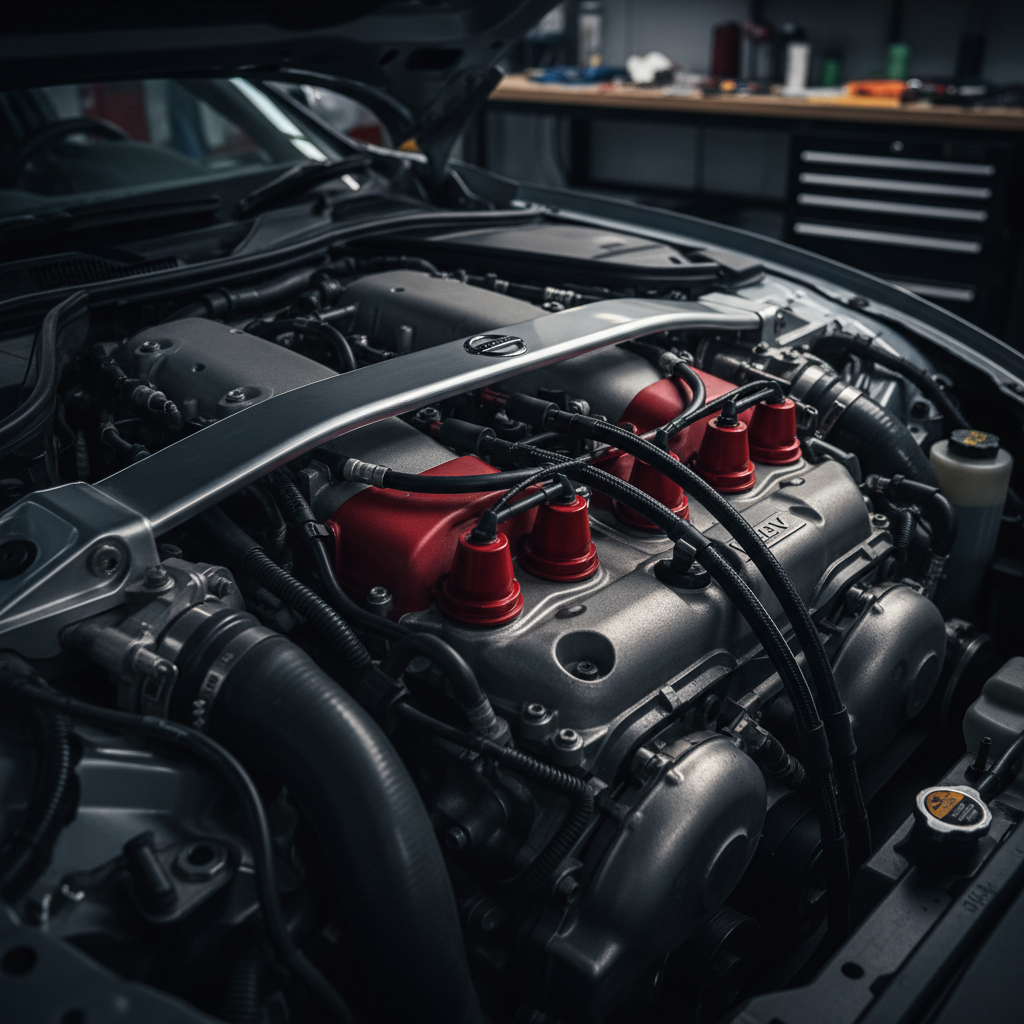
How to Find the 370Z Hidden Timing Window for 25HP Gains
Most 370Z tunes leave 25 horsepower on the table because they follow factory timing curves too closely. The sweet spot sits between 2500-4500 RPM where Nissan’s engineers pulled timing back 4-6 degrees more than necessary for pump gas reliability.
Quick Answer
- Factory 370Z timing pulls back 4-6 degrees too early between 2500-4500 RPM for conservative reliability
- Adding 2-3 degrees advance in this window safely gains 20-25 wheel horsepower on stock internals
- Target 18-20 degrees total timing at 3500 RPM under full boost instead of factory 15-16 degrees
- Monitor knock sensors and AFR closely, but this window rarely sees knock on 91+ octane
- The gain comes from better combustion efficiency, not higher peak timing numbers
370Z timing advance window: The RPM range between 2500-4500 where the factory ECU reduces ignition timing more conservatively than required for knock protection, leaving recoverable power on pump gasoline.
What the Factory Timing Curve Actually Does
Nissan programmed the VQ37VHR to survive worst-case scenarios. Bad gas, carbon buildup, aggressive driving in 40°C heat with the A/C cranked. The timing map reflects this paranoia, especially in the mid-range where most people actually drive.
Pull a baseline log on a stock 370Z and you’ll see timing drop from around 22 degrees at 2000 RPM down to 15-16 degrees by 3500 RPM under load. That’s a massive pull for an engine that’s barely breathing hard yet. The VQ37 can handle 18-20 degrees at 3500 RPM all day long on decent pump gas.
This isn’t about peak power RPM where every tuner focuses. That 6500+ RPM range is already dialed in pretty well from the factory. The hidden gains live in the everyday driving range where the ECU assumes you’re running 87 octane garbage and your engine has 150,000 miles on it.
The factory curve prioritizes durability over everything else. Fair enough for a warranty, but it leaves educated owners with properly maintained cars missing out on free power.
What the Data Actually Shows
Real-world logs from modified 370Zs reveal the timing advance sweet spot consistently. Stock internals cars running 91+ octane can handle 18-20 degrees total timing at 3500 RPM, 16-18 degrees at 4000 RPM, and 14-16 degrees at 4500 RPM. That’s 2-4 degrees more advance than factory across the entire window.
The power gains are real and measurable. A stock 370Z making 280 wheel horsepower typically jumps to 305-310 whp just from timing optimization in this range. On cars with intake and exhaust mods, the gains stretch to 20-25 whp because the engine flows better and responds more to timing changes.
Knock activity stays minimal if you’re running quality fuel. The VQ37’s knock sensors are sensitive enough to catch real knock before damage occurs. Most logs show zero knock events in the 2500-4500 RPM window even with the additional timing advance, assuming you’re not running pump gas that sat in an underground tank for six months.
AFR requirements don’t change dramatically in this window. You’re still targeting 11.8-12.2 AFR under load, maybe slightly richer if you’re pushing timing limits. The beauty of this timing window is that it doesn’t require fuel system upgrades or aggressive tuning approaches.
How to Apply This Timing Strategy Safely
Start with 2 degrees additional advance across the 2500-4500 RPM range and log everything. Watch knock retard, AFR, and intake air temps closely. The VQ37 will tell you if you’re pushing too hard through the knock sensors long before you risk engine damage.
Map the timing changes gradually. Don’t jump straight to 4 degrees additional advance. Add 1-2 degrees, log 20-30 pulls, analyze the data, then decide if there’s room for more. Conservative progression keeps engines alive and builds confidence in the tune.
Quality fuel becomes non-negotiable. This strategy works on 91+ octane from name-brand stations. If you’re running whatever’s cheapest, stick with factory timing. The knock threshold drops significantly on questionable fuel, and the risk isn’t worth the power gain.
Consider your modifications too. Stock airbox cars respond well to this approach. Heavily modified cars with aggressive cams, high-flow cats, or forced induction need different timing strategies entirely. This window works specifically for mild modifications on the factory naturally aspirated setup.
What Goes Wrong When Tuners Miss This Window
Most tuners focus exclusively on peak power RPM and ignore the mid-range completely. They’ll spend hours optimizing timing at 6500+ RPM for maybe 5 additional horsepower while leaving 20+ on the table in the range where people actually drive.
Conservative tuning approaches compound the problem. Tuners who follow factory curves religiously miss this opportunity because they assume Nissan got it right everywhere. Factory timing is a compromise between durability, emissions, and power. If durability isn’t your primary concern, there’s room to optimize.
Aggressive tuning approaches create different problems. Some tuners add timing everywhere without understanding where the real gains exist. They’ll push 25+ degrees at 2000 RPM where knock becomes likely, instead of focusing on the mid-range window where timing advance actually pays dividends safely.
Inadequate logging kills these tunes. You need knock count data, not just knock retard. You need real-time AFR monitoring, not just wideband averages. Without proper data, you’re guessing whether the additional timing is helping or hurting. The 370Z community forums are full of people who added timing blindly and wondered why their cars felt worse.
How much timing advance can a stock 370Z handle safely?
A stock VQ37VHR on quality 91+ octane can typically handle 2-4 degrees additional advance over factory timing in the 2500-4500 RPM range. Start with 2 degrees and monitor knock activity carefully. Going beyond 20 degrees total timing at 3500 RPM increases knock risk significantly, even on premium fuel. The key is gradual progression while logging knock sensors continuously.
Why does adding timing in the mid-range make more power than peak RPM timing?
The mid-range RPM window sees the biggest gap between factory conservative timing and what the engine can actually handle. Nissan pulls timing aggressively here to protect against worst-case scenarios, while peak RPM timing is already closer to optimal. Additionally, mid-range timing improvements affect a broader section of the power curve where people actually drive, making the gains more noticeable than small peak power increases.
What knock count numbers should worry 370Z owners with advanced timing?
Zero knock counts are ideal, but occasional single-digit knock events under heavy load aren’t necessarily dangerous if knock retard responds properly. Consistent knock counts above 10-15 per pull, or any sustained knock retard over 3-4 degrees, indicates you’ve pushed timing too far. The VQ37’s knock sensors are sensitive, so trust them when they detect combustion irregularities.
Does this timing strategy work with ethanol blends like E85?
E85 changes everything about timing requirements and knock resistance. The octane boost from ethanol allows significantly more aggressive timing advance, but the optimal timing curves shift dramatically. This specific 2500-4500 RPM window strategy applies to pump gasoline tuning only. E85 tunes require completely different approaches to timing and fueling that go well beyond simple advance adjustments.
The 370Z timing window represents everything good about modern engine management when you understand what you’re looking at in the data. Conservative factory programming leaves room for optimization, but only if you approach it systematically with proper logging. TorqueMetrics makes tracking these timing changes straightforward, with knock analysis tools that help you find the sweet spot safely.