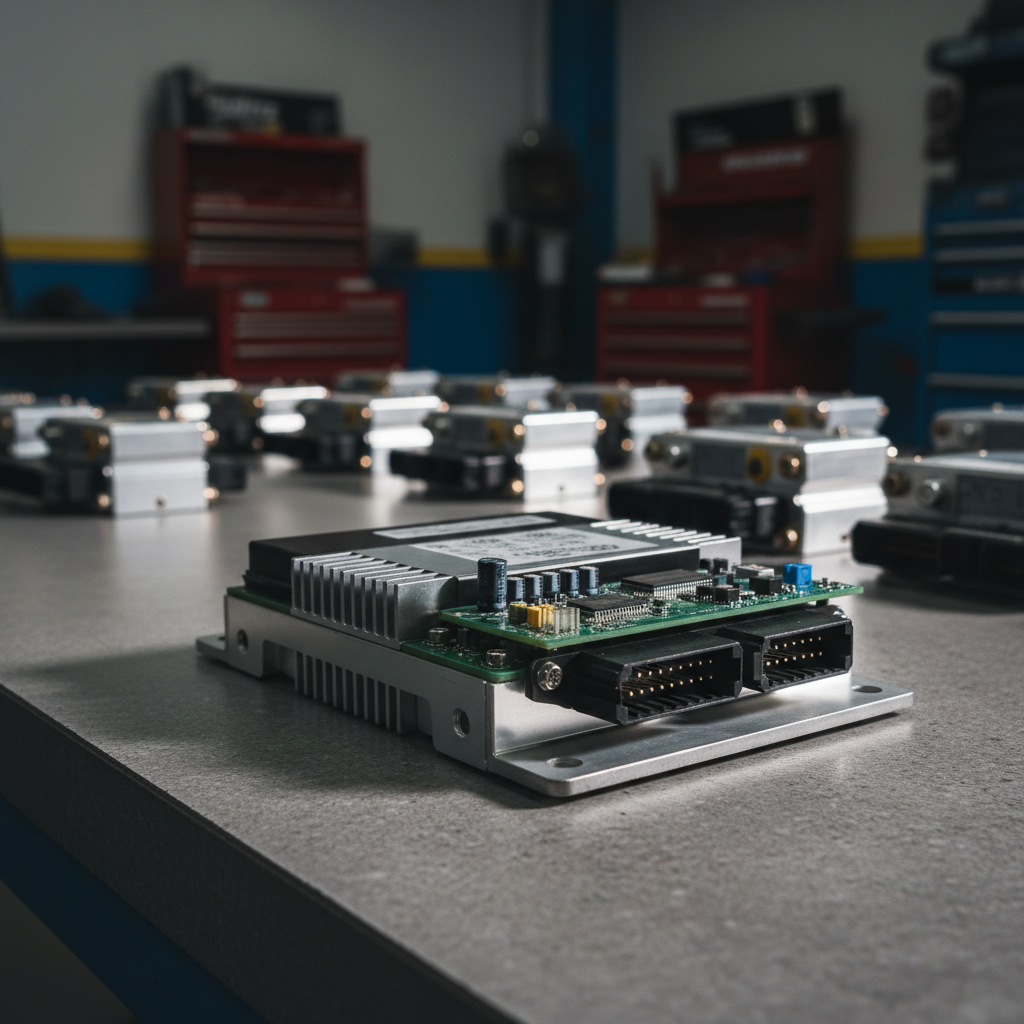
VQ37 Factory ECU vs Standalone: When to Spend the $3000
The factory VQ37 ECU can handle 500+ wheel horsepower on pump gas and 600+ on E85 without even working hard. Unless you’re building a dedicated track weapon with a built motor, anti-lag, and launch control, that $3000 standalone ECU is expensive overkill for what your datalog actually needs.
- Factory VQ37 ECUs support 500+ wheel horsepower reliably with proper tuning
- Standalone units excel at dedicated race builds requiring custom features and advanced strategies
- UpRev and ECUtek offer 90% of what most street builds need for under $1000
- Your money goes further on supporting mods like fuel system upgrades and intercooling
- Switch to standalone when you hit the factory ECU’s actual limits, not theoretical ones
ECU tuning platforms: Software and hardware systems that modify how your engine management unit controls fuel delivery, ignition timing, boost levels, and other parameters to optimize performance for modifications.
What the Factory VQ37 ECU Actually Handles
The VQ37 factory ECU runs closed-loop fuel control up to about 85% load, then switches to open-loop above that. It can manage injector duty cycles up to 85% reliably, which translates to serious power on the right hardware. With 1000cc injectors and a proper fuel system, you’re looking at 550-600 wheel horsepower capability on the stock ECU with UpRev or ECUtek tuning.
The factory knock sensing is actually solid. The ECU pulls timing aggressively when it detects knock, then adds it back gradually. Most tuners can work within this framework effectively. Your datalog will show timing corrections happening in real time, but the system recovers quickly with proper tuning. The factory boost control works up to about 18 PSI (124 kPa) on most setups before you start seeing erratic behavior or inability to hold target boost.
Where the factory ECU starts showing limits is in the flexibility department. You get basic launch control through some platforms, but forget about anti-lag, true flex fuel, or advanced traction control. The factory wideband integration is limited, though you can log AFR data through most tuning platforms. For most street cars running bolt-ons through single turbo conversions, these limitations don’t matter.
When Standalone ECUs Show Their Worth
Standalone units like Haltech, AEM, or MoTeC earn their keep when you need features the factory ECU simply can’t provide. Built motor with aggressive cams? You need the ability to run individual cylinder timing corrections and custom idle strategies. Running methanol injection with staged nitrous? You need the I/O capabilities and custom switching logic that standalone systems provide.
The real advantage shows up in the data logging capabilities. A proper standalone logs 200+ channels at high sample rates. You can monitor individual cylinder EGTs, track gear-dependent boost curves, and run custom protection strategies that shut down specific systems when parameters go out of range. Your datalog becomes a complete picture of what the engine is doing, not just the basics the factory ECU tracks.
Track-focused builds benefit from launch control systems that can modulate power delivery based on wheel speed sensors, not just RPM limits. Anti-lag keeps turbos spooled between corners. Traction control can intervene before the driver knows there’s a problem. These systems integrate with telemetry packages for proper data analysis between sessions.
The Real Cost Analysis Beyond Initial Price
That $3000 standalone purchase is just the entry fee. Professional tuning on standalone systems runs $2000-4000 depending on complexity because the tuner is building maps from scratch instead of modifying factory tables. You need custom wiring harnesses, additional sensors, and often supporting hardware like wideband controllers and boost control solenoids.
Compare this to UpRev or ECUtek where you’re paying $600-800 for the license plus $800-1500 for professional tuning. The tuner works with existing sensor inputs and factory wiring. Your total investment stays under $2500 for a complete tune that handles serious power levels. The extra $3000-5000 you save goes toward fuel system upgrades, intercoolers, or actual engine modifications that show up in your power numbers.
Reliability becomes a factor too. Factory ECUs have years of development behind their base maps. Tuners modify proven strategies rather than writing everything from scratch. Standalone tunes require more conservative approaches initially because you’re working without the safety nets built into factory programming. This often means leaving power on the table until you have extensive dyno time and real-world data.
Common Mistakes That Waste Money
The biggest mistake is buying standalone before hitting the factory ECU’s actual limits. Most VQ37 owners never push past 400 wheel horsepower where the factory system still has plenty of headroom. They spend standalone money based on theoretical future builds that never happen. Two years later, they’re still running the same turbo kit they could have tuned perfectly on the factory ECU.
Another common error is underestimating the supporting modifications needed. You can’t just bolt a standalone ECU onto a stock fuel system and expect miracles. The money spent on fancy engine management often leaves the budget short for the fuel pumps, injectors, and intercooling that actually enable the power gains. Your datalog shows rich AFRs not because the ECU can’t compensate, but because the fuel system can’t deliver what the tune is asking for.
Tuning shop selection becomes critical with standalone systems. Not every tuner has deep experience with every platform. That $4000 tune might come from someone learning on your car if you don’t research their background. Factory ECU tuning has a larger pool of experienced professionals because the platforms are more common and the learning curve is gentler.
When should I consider upgrading from factory ECU to standalone?
Upgrade when you hit the factory ECU’s actual capability limits, not theoretical ones. This typically happens around 500+ wheel horsepower on pump gas, when you need advanced features like anti-lag or staged injection, or when you’re building a dedicated track car requiring telemetry integration. For most street builds, the factory ECU with proper tuning handles power levels that exceed what the rest of the drivetrain can manage reliably.
What power level can the VQ37 factory ECU actually support?
The factory VQ37 ECU reliably supports 500+ wheel horsepower on pump gas and 600+ on E85 with proper supporting modifications. The limiting factors become fuel system capacity and turbocharger efficiency rather than ECU capability. Most tuners can achieve these power levels using UpRev or ECUtek platforms while maintaining factory reliability and driveability characteristics.
Are there specific modifications that require standalone ECU management?
Standalone ECUs become necessary for built motors requiring individual cylinder timing control, methanol injection systems with complex staging, anti-lag systems for track use, or when you need extensive data logging beyond what factory systems provide. Most bolt-on modifications through single turbo conversions work perfectly with factory ECU tuning platforms. The decision should be based on required features, not just power targets.
How much does professional tuning cost for each option?
Factory ECU tuning typically runs $800-1500 for professional dyno tuning because tuners modify existing maps rather than building from scratch. Standalone ECU tuning costs $2000-4000 due to the complexity of creating complete engine maps and calibrating all systems from baseline. Add hardware costs and the total investment difference often exceeds $5000, money that could go toward supporting modifications that directly impact performance.
Your datalog tells the real story about what your engine needs. Most VQ37 builds never push the factory ECU hard enough to justify standalone systems. Save your money for fuel system upgrades, proper intercooling, and dyno time. When you actually hit the limits where standalone makes sense, you’ll know it from the data, not from forum speculation.