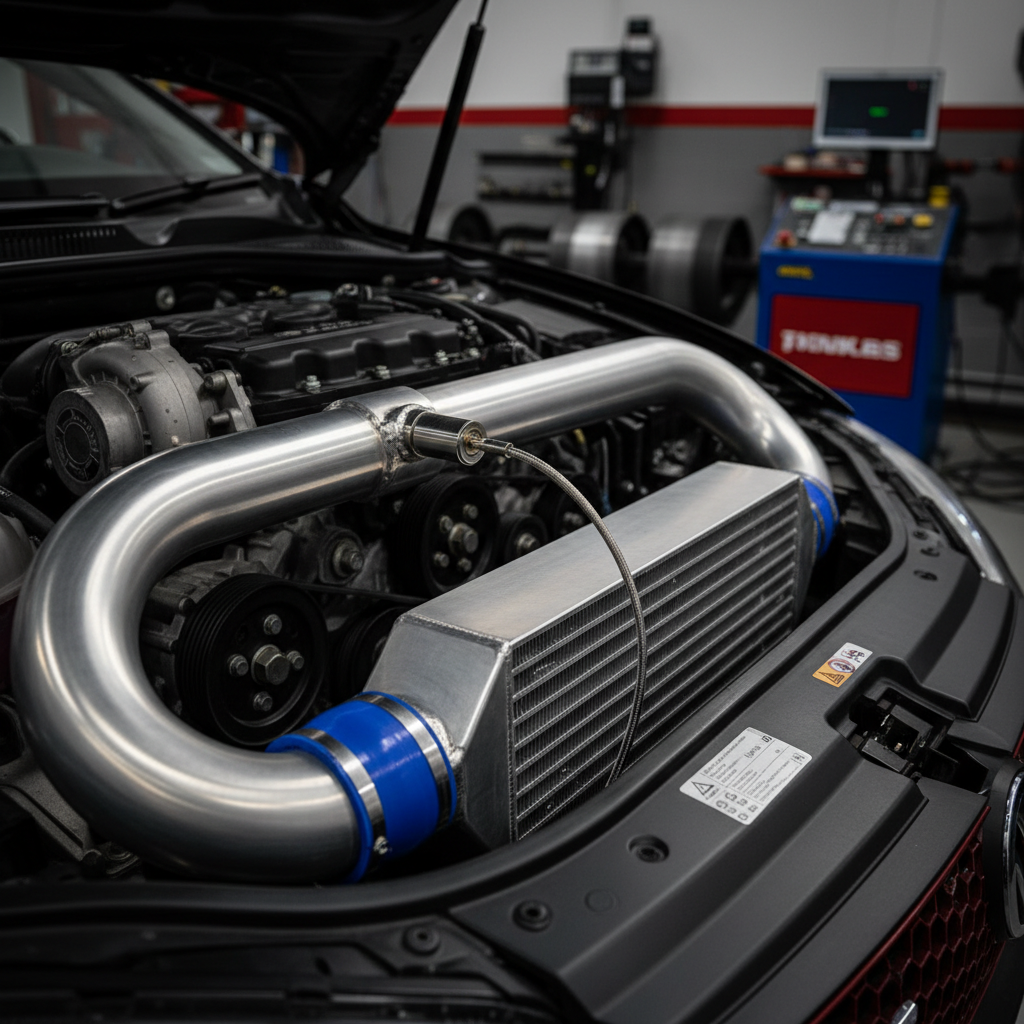
Do Aftermarket GTI Intercoolers Actually Work? Real IAT Data
Aftermarket intercoolers for the Golf GTI and R show impressive temperature drops on the dyno, typically 20-25°C cooler than stock under peak conditions. Real-world intake air temperature (IAT) monitoring reveals heat soak still occurs within 12-15 minutes of sustained driving, regardless of intercooler size.
- Aftermarket GTI intercoolers drop peak IATs by 20-25°C on dyno pulls
- Heat soak begins after 12 minutes of continuous hard driving on most setups
- Stock intercoolers typically reach 55-60°C IATs, aftermarket units plateau around 45-50°C
- Boost efficiency drops 8-12% once heat soak sets in, regardless of intercooler
- Placement and airflow matter more than core size for sustained performance
Heat soak: The gradual temperature rise in your intercooler core during sustained high-load driving, where heat input exceeds the core’s ability to dissipate it through ambient airflow.
What Stock vs Aftermarket GTI Intercooler Data Actually Shows
The stock GTI intercooler reaches 55-60°C IATs during back-to-back dyno pulls, while most aftermarket units peak at 35-40°C under identical conditions. This 20-25°C difference translates to roughly 15-20hp more power and noticeably sharper throttle response. Your knock count stays lower, timing stays advanced, and boost pressure holds steady.
But dyno pulls last 30 seconds. Real driving doesn’t.
Track the same car through a 15-minute track session and the story changes. The aftermarket intercooler still outperforms stock, but both systems climb toward heat soak. Stock IATs hit 65-70°C and stay there. Aftermarket setups plateau around 45-50°C. That’s still a meaningful difference, but nowhere near the dramatic gap you see on the dyno.
The physics are straightforward. Heat input from compressed air exceeds heat rejection through the core and ambient airflow. Core size helps, but placement, airflow routing, and thermal mass determine how long you can maintain those impressive peak numbers.
Where Heat Soak Kills Performance in Real World Driving
Heat soak doesn’t just make your intercooler less effective, it cascades through your entire tune. IATs climbing from 35°C to 50°C during a track session trigger timing retard maps, reduce boost efficiency, and force the ECU into progressively more conservative fueling strategies.
Your boost gauge might still read 18 PSI (124 kPa), but actual manifold pressure drops as IAT correction factors kick in. A GTI making 280hp with 35°C IATs makes closer to 250hp with 55°C IATs, even if boost pressure appears unchanged. The ECU pulls 4-6 degrees of timing and enriches the mixture to protect the engine.
Data logs reveal this clearly. Log block 020 shows your actual boost pressure after corrections. Compare that to your boost gauge reading during heat soak conditions. The difference is your lost performance, and it happens regardless of intercooler brand.
Most GTI owners notice this as power falling off after several hard pulls or during extended highway runs in summer. The car feels strong initially, then gradually loses punch. That’s heat soak working through your tune’s safety margins.
How to Actually Evaluate Intercooler Performance
Skip the dyno marketing charts. Log IAT sensor data during actual driving conditions that matter to you. If you do track days, log a 20-minute session. If you enjoy mountain runs, log a sustained climb. If you drag race, log back-to-back passes with realistic cool-down periods.
Set up logging to capture IAT at the sensor, not calculated values. Log manifold absolute pressure alongside boost gauge readings. Include ignition timing advance and knock retard counts. This combination shows you exactly what heat soak costs in real performance terms.
Compare temperature rise rates, not just peak temperatures. A good intercooler reaches steady-state quickly and stays there. Poor designs show continuous temperature climb that never plateaus. The difference between a 45°C plateau and 50°C continuous climb is substantial over a 15-minute session.
Pay attention to recovery time between pulls. Quality setups drop back toward ambient within 2-3 minutes of normal driving. Systems with poor heat rejection stay elevated much longer, meaning shorter intervals between heat soak episodes.
Why Expensive Intercoolers Still Heat Soak
Core size isn’t the limiting factor in most GTI intercooler installations. Airflow is. The stock location forces compromise between core size and airflow restriction. Larger cores can actually worsen airflow through the radiator stack, creating cooling system issues that offset intercooler gains.
Thermal mass works against you during sustained driving. That massive bar-and-plate core that looks impressive absorbs heat quickly during the first few minutes, then becomes a heat reservoir that takes forever to cool down. Smaller cores with better airflow characteristics often perform better during extended sessions.
Most aftermarket intercoolers optimize for peak performance, not sustained performance. The marketing focuses on dyno numbers because those sell upgrades. Real-world heat soak performance is harder to measure and less dramatic in advertising copy.
Piping routing matters enormously. Intercoolers that require complex piping runs often trap heat in places stock systems don’t. Longer piping runs create more surface area for heat absorption and reduce airflow efficiency throughout the charge air system.
What Goes Wrong When People Miss This
GTI owners spend €800 on intercoolers expecting 25°C temperature drops throughout their driving session, then wonder why their car still feels sluggish after several hard pulls. The intercooler is working exactly as designed, but their expectations were based on peak performance figures, not sustained performance reality.
Worse, some owners increase boost pressure after intercooler upgrades, assuming the temperature improvement gives them more headroom. This accelerates heat soak onset and can trigger knock events once IATs climb beyond what the tune expects. Your fancy intercooler can’t save a tune that assumes unrealistic temperature conditions.
Track day drivers get caught off-guard when their modified car performs well for the first few laps, then progressively loses power. They blame fuel pump, turbo, or tune issues when the real culprit is heat soak progression that no intercooler completely eliminates.
The most expensive mistake is stacking modifications without understanding the complete thermal system. Adding a bigger turbo, higher boost, and aftermarket intercooler can actually worsen heat soak if the additional heat input overwhelms even the improved heat rejection capacity.
Do aftermarket GTI intercoolers eliminate heat soak completely?
No aftermarket intercooler eliminates heat soak entirely during sustained high-load driving. They delay its onset and reduce its severity, typically maintaining 10-15°C cooler IATs once steady-state is reached. The best setups plateau around 45-50°C instead of the 65-70°C you see with stock intercoolers, but all systems eventually reach thermal equilibrium where heat input matches heat rejection. This happens within 12-15 minutes of continuous hard driving regardless of intercooler size or design.
How much power do you actually lose to intercooler heat soak?
GTIs typically lose 8-12% of peak power once heat soak sets in, translating to roughly 25-35hp on a Stage 2 setup. This occurs through timing retard, boost efficiency reduction, and ECU safety strategies rather than dramatic boost pressure loss. Your boost gauge might still read normal, but actual manifold pressure after temperature corrections drops significantly. The power loss is progressive rather than sudden, which is why many drivers don’t notice it until they compare datalogs from cool morning runs versus afternoon track sessions.
What’s the best way to monitor intercooler performance in real time?
Log IAT sensor data directly rather than relying on calculated values, and monitor it alongside manifold absolute pressure and ignition timing advance. Set up your logging to capture these parameters during actual driving conditions you care about, whether that’s track sessions, mountain runs, or drag strips. Focus on temperature rise rates and recovery times between pulls rather than just peak temperatures. A good intercooler reaches steady-state quickly and recovers rapidly, while poor designs show continuous temperature climb and slow recovery that compounds heat soak effects over multiple cycles.
Why do some aftermarket intercoolers perform worse than advertised?
Most intercooler marketing focuses on peak dyno performance rather than sustained real-world conditions because peak numbers are more dramatic and easier to measure. Large cores can actually restrict airflow through the entire cooling stack, creating radiator cooling issues that offset intercooler gains. Poor piping routing traps heat and reduces overall charge air system efficiency. Additionally, cores optimized for maximum heat rejection often have poor airflow characteristics that hurt performance during extended driving sessions when consistent airflow matters more than thermal mass.
Understanding intercooler heat soak helps you set realistic expectations for your GTI’s performance envelope and tune accordingly. Log your actual IAT data during the driving you do most, and you’ll know exactly what your modification budget actually bought you. TorqueMetrics makes it easy to overlay multiple sessions and compare how different setups handle sustained loads, so you can see exactly where your thermal limits really are.