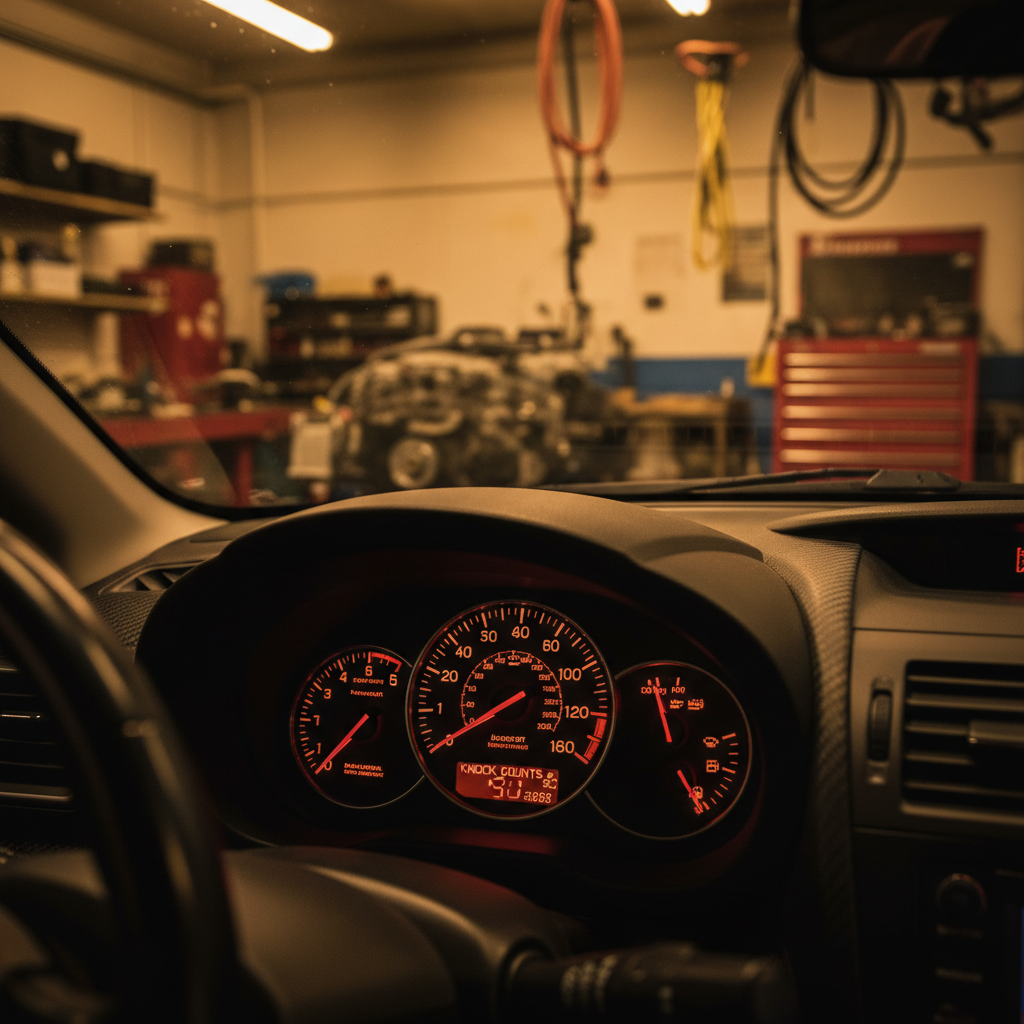
Why Spring Temperature Changes Wreck STI Tunes (Data Analysis)
Spring temperature changes destroy more STI engines than bad tunes. A 20°C temperature swing shifts your knock threshold by 2-3 timing degrees, which means your safe winter tune becomes a grenade at summer temps. The data doesn’t lie, and neither do blown head gaskets.
Quick Answer
- 20°C temperature increases reduce knock threshold by 2-3 timing degrees on average
- Intake air temperatures above 40°C trigger significant timing retard even on conservative tunes
- Your winter tune at 5°C needs 3-4 degrees less timing when ambient hits 25°C
- Most STI owners don’t monitor IAT closely enough during seasonal transitions
- Safe AFRs shift richer (10.6-10.8 vs 10.8-11.0) as temperatures climb
Temperature-induced knock: When rising air temperatures reduce your engine’s octane tolerance, forcing the ECU to pull timing to prevent detonation, even on previously safe tune parameters.
What Temperature Actually Does to Your Knock Threshold
Your STI’s knock threshold isn’t fixed. It moves with temperature because hot air reduces the effective octane rating of your fuel. Every 10°C increase in intake air temperature costs you roughly one timing degree of knock margin on 91 octane. On 93 octane, you get maybe 1.5 degrees more headroom, but the relationship holds.
Here’s what happens in your combustion chamber: hotter intake air means higher compression temperatures before ignition. Higher temperatures make fuel more prone to pre-ignition and knock. Your ECU pulls timing to compensate, but most STI tunes are written for specific temperature ranges. Step outside that range and the safety margins evaporate.
The EJ257 is particularly sensitive because of its semi-closed deck design and high compression ratio for a turbo motor. Where other platforms might tolerate temperature swings with mild timing adjustments, the STI motor demands more aggressive corrections. This is why you see 3-5 degrees of knock retard on hot days when winter datalogs showed zero corrections.
Real-world example: a Stage 2 STI tuned in winter at 5°C ambient typically runs 16-18 degrees of timing at peak torque. Same car, same tune, 25°C spring day pushes intake temps to 45-50°C under load. Now the ECU is pulling 2-3 degrees consistently, and peak timing drops to 13-15 degrees. That’s not a fueling issue or a boost leak. That’s temperature physics.
What Your Datalogs Show During Temperature Transitions
Spring datalogs tell the whole story if you know what to look for. Your Fine Knock Learn values start climbing first, usually hitting 2-3 degrees of retard before you notice performance changes. Dynamic Advance Multiplier drops from 1.0 to 0.85-0.90 as the ECU tries to stay ahead of knock events.
Watch your Intake Air Temperature sensor closely. Winter logs typically show IATs stabilizing around 20-30°C under boost. Spring heat pushes those same conditions to 40-50°C, and summer can hit 60°C+ on aggressive tunes. Each 10°C jump costs timing and requires richer AFRs to maintain safety margins.
Your feedback knock correction numbers reveal the real story. Safe winter numbers show -1.41 to 0.00 degrees most of the time, with occasional -2.81 spikes that recover quickly. Spring logs on the same tune start showing consistent -2.81 to -5.63 values, with recovery times stretching longer. Those sustained corrections mean your tune is fighting temperature, not random knock events.
Boost levels matter too. Your winter tune might hold 18 PSI (124 kPa) cleanly to redline. Spring heat forces the wastegate to open earlier, dropping boost to 16-17 PSI (110-117 kPa) by 6500 RPM as the ECU protects against temperature-induced knock. Peak boost stays the same, but the curve flattens out where you actually make power.
AFR readings shift predictably. Winter logs showing 11.0-11.2 AFRs under full load need to drop to 10.6-10.8 as temperatures climb. The ECU uses fuel for cooling, and what looked rich in winter becomes necessary in spring. If your AFRs stay the same across temperature ranges, your tune isn’t adapting properly.
How to Tune for Seasonal Temperature Changes
Smart STI tuning accounts for temperature from day one. Your base timing maps should include temperature compensation, not just rely on knock feedback to save the motor. Set your initial timing 2-3 degrees conservative, then let temperature-based adders bring it back up in cold conditions.
Target your IAT compensation tables aggressively. Most factory tables pull 1 degree per 10°C increase past 30°C. Aftermarket tunes should pull 1.5 degrees per 10°C, especially above 40°C intake temps. This keeps you ahead of knock instead of reacting to it.
Fuel maps need seasonal adjustment too. Your base AFR targets should be 10.8 at moderate IATs (30-40°C) and drop to 10.6 when temps exceed 45°C. Rich AFRs cool combustion chambers and provide knock margin that timing alone can’t deliver. Don’t fight the physics, use them.
Boost control requires attention during temperature transitions. Set your boost targets 1-2 PSI lower for summer driving if you’re not running meth injection or upgraded intercooling. Chasing the same boost numbers across all temperatures forces the ECU to pull timing instead of managing heat load properly.
Log everything during transition periods. Spring and fall temperature swings reveal how well your tune adapts. Pull logs on 10°C days and compare them to 25°C drives using identical routes and driving styles. The differences show you exactly where your tune needs work before summer heat arrives.
Common Mistakes That Kill STI Motors in Spring
The biggest mistake is ignoring IAT readings in your datalogs. Most STI owners watch boost, AFRs, and knock counts, but miss the temperature data that predicts everything else. Your intake temps above 45°C should trigger immediate attention, not dismissal as “normal for spring.”
Running winter tune parameters into summer heat destroys motors. That conservative tune that made 280 whp safely at 5°C becomes a liability at 25°C. The timing margins disappear, and what looked like a safe conservative approach turns into sustained knock that cracks ringlands or lifts head gaskets.
Chasing dyno numbers across temperature ranges forces dangerous compromises. Your winter dyno tune optimized for 15°C shop temperatures needs different parameters for 30°C summer driving. Trying to maintain the same power output year-round means accepting knock risk or installing significant cooling modifications.
Inadequate intercooling becomes obvious in spring. Your stock top-mount intercooler might handle winter driving fine, but spring heat soak kills intake temps and timing. Owners who skip intercooler upgrades while chasing power modifications discover this the expensive way when temperatures climb.
Poor fuel choices compound temperature problems. 91 octane fuel that worked adequately in winter becomes inadequate as temperatures rise. The effective octane rating drops with heat, and your safety margins evaporate. Summer driving demands higher octane or more conservative timing, not wishful thinking.
How much timing should I expect to lose when temperatures rise?
Expect to lose 1-1.5 degrees of timing for every 10°C increase in intake air temperature past 30°C on pump gas. A 20°C swing from winter to spring typically costs 2-3 degrees total timing at peak torque. This is normal temperature compensation, not a tune problem. Plan your base timing accordingly, and don’t chase winter dyno numbers in summer heat without proper cooling modifications.
What intake air temperatures are too high for my STI tune?
Intake air temperatures above 50°C under boost indicate serious cooling problems that timing adjustments can’t solve. Most STI tunes become unsafe past 45°C IAT without significant timing reduction. Sustained temperatures above 40°C require richer AFRs (10.6-10.8 vs 11.0-11.2) and reduced boost targets. If your logs show consistent IATs above 50°C, address intercooling before chasing more power.
Should I retune my STI for summer driving conditions?
Yes, if your current tune was optimized for cold weather conditions. A proper seasonal retune adjusts base timing maps, AFR targets, and boost control for higher operating temperatures. This prevents relying solely on knock feedback for safety margins. Most professional tuners recommend separate maps for summer and winter driving, especially on aggressive builds. The cost of a retune is negligible compared to engine replacement.
Why do my knock counts increase even with conservative timing?
Rising temperatures reduce fuel octane effectiveness and increase combustion chamber heat, making knock more likely even with conservative timing. Your “safe” winter timing becomes marginal in spring heat. Additionally, heat soak in the intake manifold and cylinder heads creates hot spots that trigger knock sensors regardless of timing advance. This is why temperature management through intercooling and fuel enrichment matters more than just pulling timing.
Temperature changes reveal everything about your tune’s real-world safety margins. Spring heat exposes winter optimizations that looked conservative in cold weather but become dangerous as temps climb. Smart STI owners log aggressively during seasonal transitions and adjust their parameters before problems develop, not after knock events start appearing. Your datalogs tell the whole story if you’re watching the right parameters.