How to Tell if WRX Boost Creep is Hardware or Tune Issues
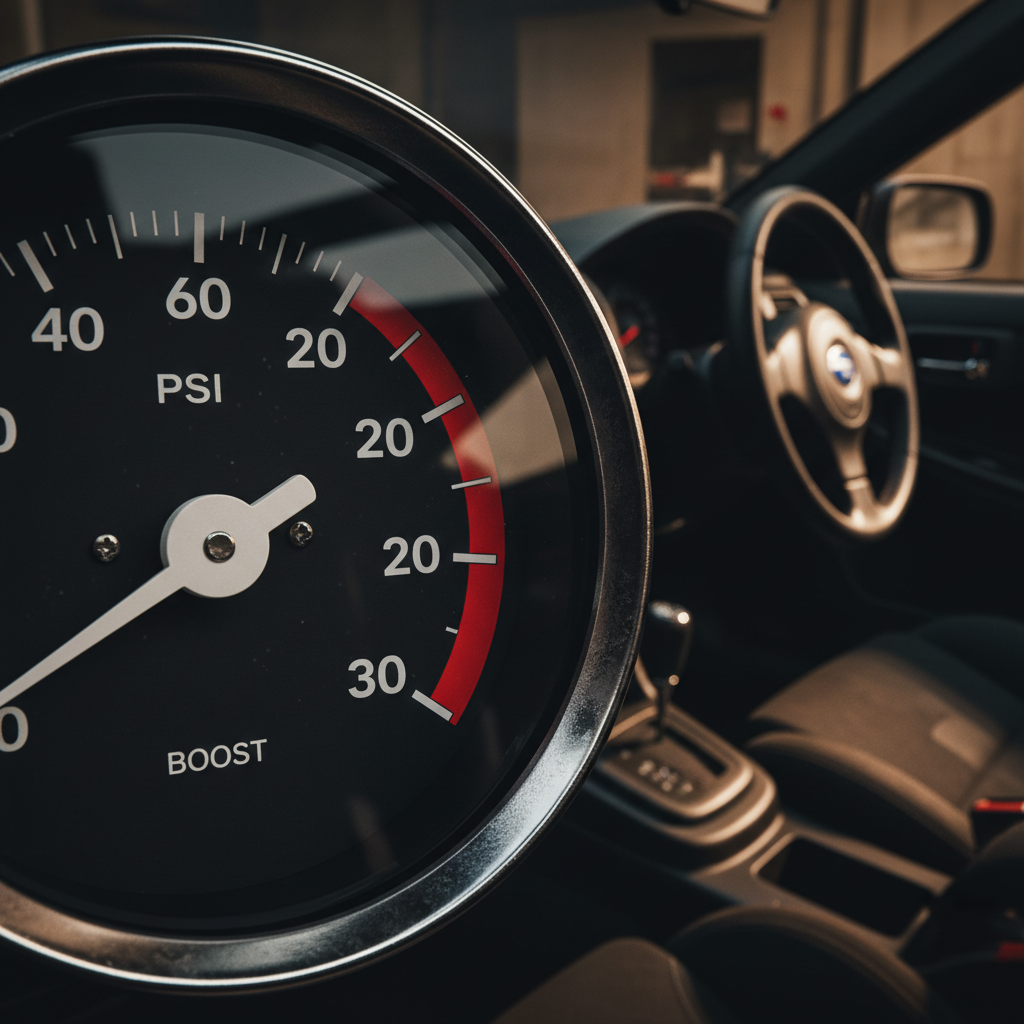
Your Stage 2+ WRX is creeping boost past target, and you’re staring at three potential culprits: a failing wastegate, poorly calibrated tune, or dying boost controller. The difference between guessing wrong and diagnosing correctly is about $800 and two weeks of downtime.
Quick Answer
- Wastegate duty cycle over 85% during boost creep indicates hardware failure, not tuning issues
- Boost error vs RPM slope reveals if your tune’s PID settings are fighting physics or hardware limits
- Pre-boost wastegate position shows mechanical problems before they cause overboost conditions
- Check these three parameters in sequence before replacing any components
- Most owners start with the tune when the problem is usually hardware on high-mileage setups
Boost creep: When actual boost pressure exceeds target boost, typically occurring at higher RPMs where exhaust flow overwhelms the wastegate’s ability to regulate pressure. The root cause determines whether you need hardware replacement or tune adjustments.
What Your Wastegate Duty Cycle Actually Tells You
Wastegate duty cycle is your first diagnostic checkpoint, and most people read it backwards. When you’re seeing boost creep, check what your ECU is commanding the wastegate to do, not just what boost pressure you’re hitting.
A properly functioning wastegate on a Stage 2+ setup should hold target boost with duty cycles between 45-75% under normal conditions. If you’re seeing duty cycles consistently above 85% during periods of boost creep, your wastegate actuator is mechanically incapable of controlling the exhaust flow. The ECU is screaming at it to open more, but the hardware can’t respond.
Here’s the key insight most people miss: if your duty cycle is pegged at 95%+ and you’re still creeping boost, no amount of tune adjustment will fix this. Your wastegate arm is seized, the diaphragm is torn, or the valve itself is carbon-caked shut. You’re looking at hardware replacement, not a tune revision.
Conversely, if duty cycles are reasonable (under 80%) but you’re still seeing creep, your tune’s boost control strategy needs work. The hardware is responding, but the PID loop isn’t calibrated for your specific combination of turbo, exhaust, and intake modifications.
How Boost Error vs RPM Reveals the Real Problem
Plot boost error (target minus actual) against RPM, and you’ll see one of two distinct patterns that immediately identify your issue. This is where most diagnostic processes should start, but hardly anyone checks this relationship first.
Pattern one: boost error starts small at lower RPMs and progressively worsens as RPM climbs. This is classic wastegate hardware failure. The valve can barely control flow at 4000 RPM and gives up entirely by 6500 RPM. Your exhaust flow has overwhelmed the wastegate’s mechanical limits. A tune won’t save you here.
Pattern two: boost error oscillates or spikes randomly across the RPM range, sometimes hitting target perfectly, other times overshooting by 3-4 PSI (20-28 kPa) with no predictable pattern. This screams PID tuning issues. Your boost controller is hunting for the right duty cycle because the gains are set incorrectly for your hardware combination.
The RPM component is crucial because it tells you whether you’re fighting physics (pattern one) or mathematics (pattern two). Physics problems require hardware solutions. Math problems require tune adjustments.
On a healthy Stage 2+ setup running 18-20 PSI (124-138 kPa), boost error should stay within +/- 1 PSI (7 kPa) across the entire power band. Anything worse than +/- 2 PSI (14 kPa) needs immediate attention.
Why Pre-Boost Wastegate Position Matters Most
This is the parameter everyone ignores until it’s too late. Check your wastegate position sensor reading at idle and during light throttle cruise, before boost even builds. A properly functioning wastegate should show 15-25% position at idle and respond smoothly to small throttle inputs.
If your wastegate position is stuck at 0% or 100% at idle, you have mechanical failure regardless of what happens under boost. The actuator isn’t responding to vacuum changes, which means boost control is already compromised before you even enter positive pressure.
More subtle: if wastegate position moves but with delays or sticking points, you’re seeing the early stages of actuator failure. This usually manifests as inconsistent boost control that seems random, because the wastegate response varies depending on temperature, carbon buildup, and actuator spring tension.
The diagnostic sequence matters: idle position first, then light throttle response, then full boost behavior. Most people skip straight to full boost logs and miss the early warning signs that would have saved them from an overboost situation.
What Goes Wrong When You Diagnose This Backwards
Starting with tune adjustments when you have hardware failure wastes time and creates dangerous conditions. Aggressive PID settings trying to compensate for a seized wastegate can cause overboost spikes that damage pistons or bend rods. You’re asking the ECU to solve a mechanical problem with software.
The opposite mistake costs money but isn’t dangerous: replacing perfectly good wastegate hardware because your tune’s boost control is poorly calibrated. A new wastegate won’t fix PID gains that are too aggressive or integral terms that are fighting your specific turbo’s spool characteristics.
Here’s what typically happens with backwards diagnosis: Stage 2+ owner sees boost creep, assumes the tune needs work, pays for revisions that don’t solve the problem, then finally discovers the wastegate was mechanically failed from day one. Total cost: original tune price plus revision fees plus eventual hardware replacement plus potential engine damage from overboost events.
The correct diagnostic sequence takes fifteen minutes with any decent logging setup. The incorrect sequence can cost thousands and weeks of troubleshooting.
How do I know if my wastegate duty cycle readings are accurate?
Verify your boost controller’s duty cycle output matches what the ECU is commanding by checking both parameters simultaneously during a pull. They should track within 2-3% under normal operation. Large discrepancies indicate wiring issues or boost controller failure. Also confirm your wastegate position sensor is functioning by manually actuating the arm, you should see smooth position changes in your logging software.
Can a tune fix boost creep caused by wastegate hardware problems?
No. If your wastegate physically cannot flow enough exhaust to control boost, no tune adjustment will overcome this limitation. Attempting to compensate with aggressive boost control settings typically creates dangerous overboost spikes. Hardware problems require hardware solutions. A good tuner will identify this immediately from your logs and recommend wastegate service or replacement.
What boost error is considered normal on a Stage 2+ WRX?
Healthy Stage 2+ setups should maintain boost error within +/- 1 PSI (7 kPa) across the entire powerband when properly tuned. Errors exceeding +/- 2 PSI (14 kPa) indicate either hardware problems or tune calibration issues. Consistent overshoot suggests wastegate problems, while erratic error patterns typically point to PID tuning issues.
How often should I check wastegate position at idle?
Check wastegate position during every logging session as part of your baseline readings. Position should read 15-25% at idle and respond smoothly to throttle inputs. Sudden changes in idle position readings often indicate developing actuator problems before boost control issues become apparent under load. This early detection prevents more expensive failures.
Your WRX’s boost control issues have a specific signature in the data. Check wastegate duty cycle, boost error patterns, and pre-boost position in that order. The diagnosis will be clear within three pulls. TorqueMetrics makes this analysis straightforward with comparative plotting tools designed specifically for tracking these relationships across multiple sessions.