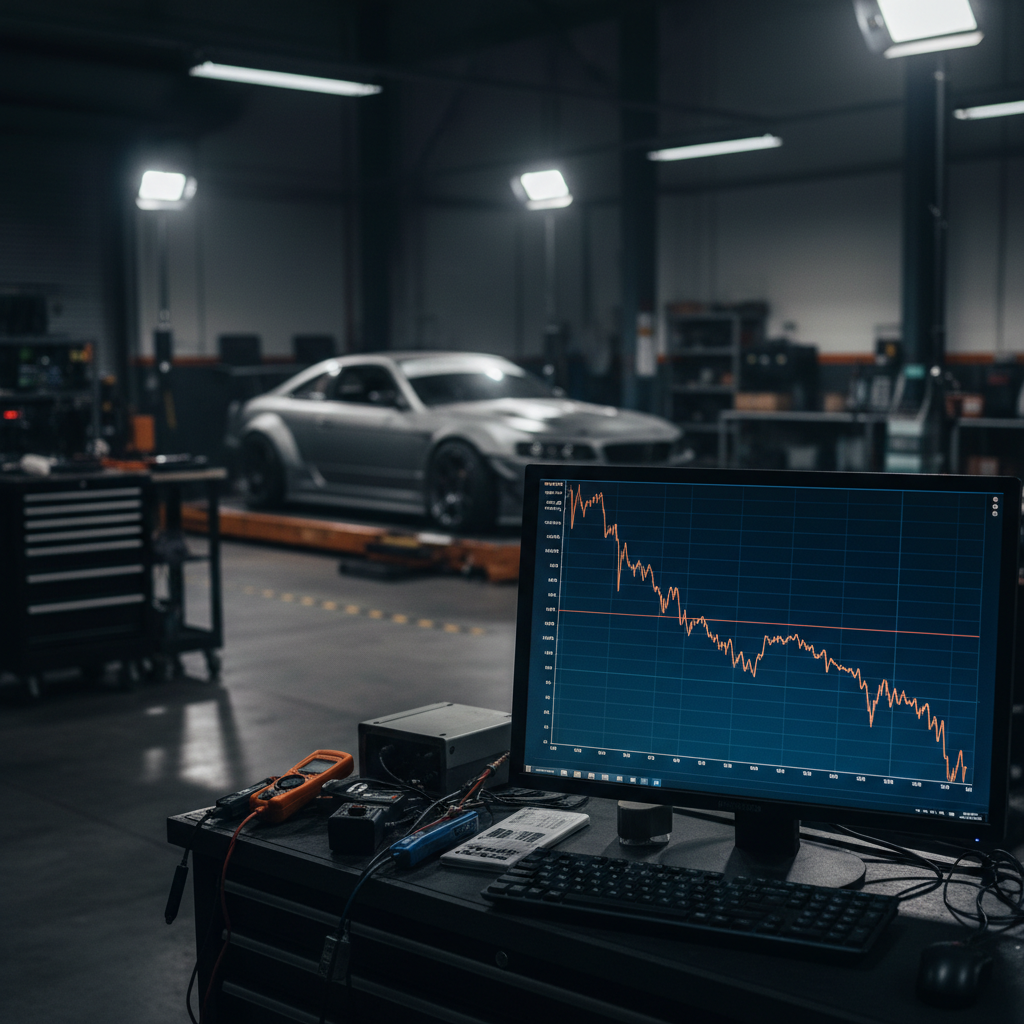
When $2K Mods Kill Power: Real Dyno Data Reveals the Truth
Nothing humbles an enthusiast faster than watching their dyno numbers drop after dropping serious cash on modifications. Recently, we analyzed a log from a vehicle running a newly installed $2,000 “performance” intake, with expectations of a 20–30 horsepower gain. The data told a different story—power was down 15 horsepower from baseline, with a sharp drop-off after 4500 RPM.
Why Expensive Doesn’t Always Mean Better
The aftermarket loves to sell the dream that bigger, shinier, and more expensive automatically equals more power. But airflow physics doesn’t care about your credit card statement. This particular intake — a popular “cold air” system with a massive cone filter — looked the part but created significant turbulence in the intake tract right where the engine needed smooth, laminar flow most.
The issue wasn’t the filter itself, but the abrupt diameter changes and sharp bends in the intake piping. At higher RPM, when airflow velocity increases dramatically, these design flaws transformed what should have been smooth air delivery into a chaotic mess. The MAF sensor started reading erratically, the ECU couldn’t maintain proper fuel delivery, and power dropped accordingly.
What the Dyno Data Actually Revealed
The numbers painted a clear picture of where things went wrong. On the baseline runs with the stock airbox, we saw consistent power delivery peaking at 247 whp at 5800 RPM with smooth AFR readings holding steady at 11.8:1 under full load. The intake air temperatures stayed reasonable at 15°C above ambient even after multiple pulls.
After the intake swap, peak power dropped to 232 whp, but more telling was the shape of the curve. Power built normally until 4500 RPM, then began falling off as the intake turbulence disrupted the MAF readings. AFR started fluctuating wildly — we saw swings from 11.2:1 to 12.8:1 within seconds on the same pull. Intake temps spiked to 35°C above ambient as the oversized filter pulled hot air from the engine bay instead of the advertised “cold air.”
The knock sensors told their own story, registering false events triggered by intake noise rather than actual detonation. The ECU responded by pulling 2-3 degrees of timing across the mid-range, further killing power output.
Warning Signs Every Tuner Should Know
Before you blame the tune or start chasing expensive solutions, look for these telltale signs of intake-related power loss:
- Erratic AFR readings under steady-state conditions — smooth airflow should produce consistent fuel delivery
- False knock events that correlate with RPM rather than load or timing changes
- Power curves that fall off sharply rather than tapering gradually toward redline
- Intake temps that climb excessively during back-to-back dyno pulls
- Boost control issues on forced induction engines as turbulent air confuses the ECU’s calculations
The fix in this case was straightforward but expensive — reverting to the stock airbox while the customer pursued a refund. Within 30 minutes, we had the car back to its baseline power levels with stable AFR readings and consistent boost control.
How TorqueMetrics Turns Logs Into Clear Answers
This is exactly where real log analysis changes the game. A dyno might show you the final number—but it won’t tell you why you got it. That’s where TorqueMetrics comes in.
Instead of digging through raw log files and guessing, TorqueMetrics automatically analyzes your data and converts it into a clean, easy-to-read report. It highlights issues, explains what’s happening, and connects the dots between your metrics—so you can instantly see what’s right and what’s holding you back.
No more second-guessing. No more missed problems buried in spreadsheets. Just clear insights you can actually act on.
Smart modifications start with understanding your baseline. With TorqueMetrics, you can log your current setup, get a simplified breakdown of your performance, and know exactly what “good” looks like—before you spend a dollar on upgrades.
Try TorqueMetrics free and turn your log files into confident, data-driven decisions, not expensive lessons.