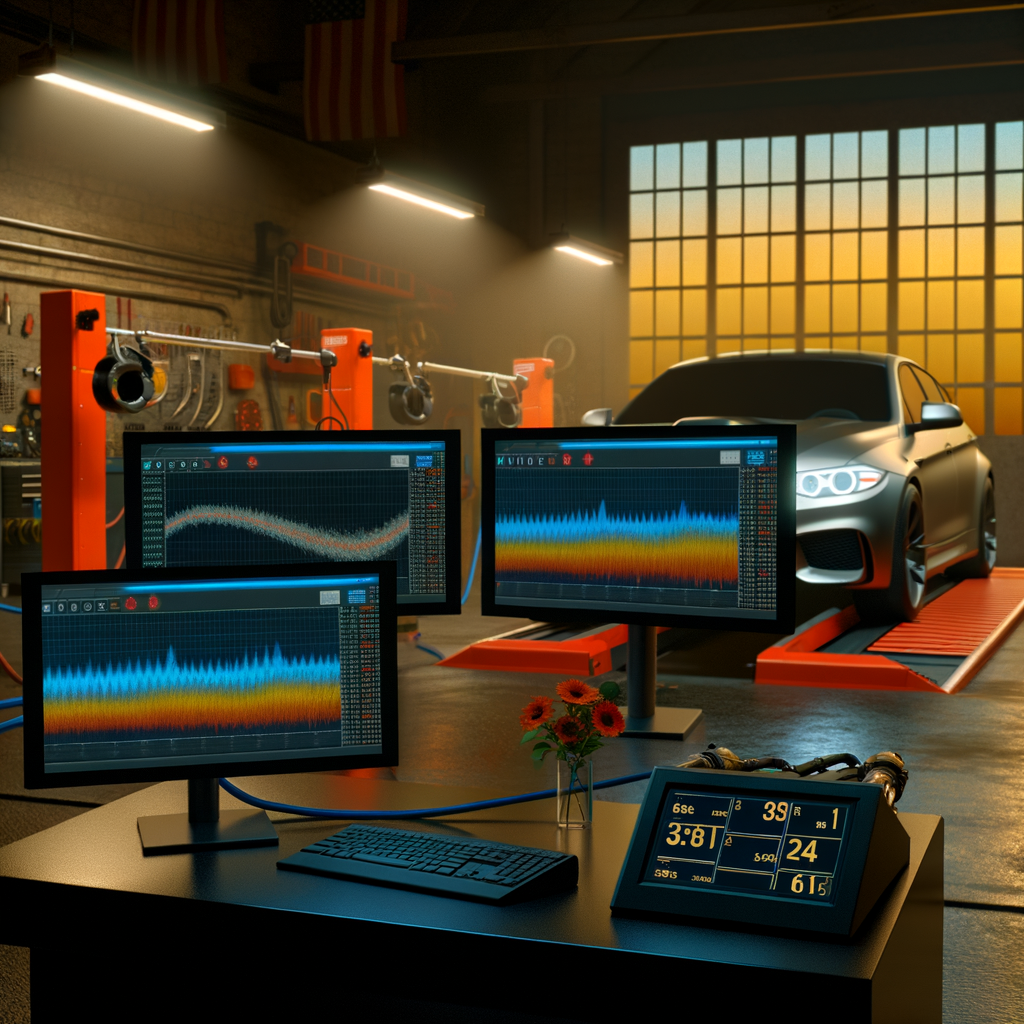
Why Peak Dyno Numbers Don’t Tell Your Car’s Real Story
Walk into any performance shop and you’ll hear the same conversation: “My car made 380hp but it doesn’t feel nearly as fast as my buddy’s 320hp build.” The customer waves their dyno sheet like a warranty claim, confused why their bigger number translates to slower quarter-mile times. Here’s the reality check every enthusiast needs to hear—peak dyno numbers are marketing, not performance metrics.
The Peak Power Deception
A dyno measures instantaneous power output across the RPM range, creating that familiar curve we all obsess over. But here’s what most people miss: your engine hits that peak number for maybe 200 RPM in a 6,000 RPM range. The other 5,800 RPM? That’s where you actually drive.
Think about it practically. When you’re accelerating through second gear, pulling onto a highway, or chasing an apex, you’re not sitting at peak power RPM. You’re climbing through the entire powerband, and that’s where area under the curve matters more than the highest point on the graph.
The real story lives in three critical areas that determine how your car actually performs: boost control consistency, timing advance stability, and air-fuel ratio management across the entire operating range.
What The Data Actually Shows
Let’s break down what separates a properly tuned car from a dyno queen. A well-tuned turbocharged setup should maintain boost pressure within 1-2 psi of target throughout the pull. If you’re seeing 22 psi at 4,000 RPM but only 16 psi at redline, that’s not “overboost tapering”—that’s a boost control problem that’s costing you real power where you need it most.
Timing advance tells an even clearer story. A healthy tune holds consistent timing values across the load range. When you see timing dropping from 18° at part throttle to 10° under full boost, that’s knock protection pulling power to save your engine. Sure, the dyno might still show good peak numbers, but you’re leaving 30-40 wheel horsepower on the table in the midrange.
Air-fuel ratios reveal the complete picture. A properly tuned WRX running E85 should maintain 10.8-11.2 AFR under full boost across the entire pull. If you’re seeing 10.5 AFR at peak power but 12.5 AFR at 5,500 RPM, your fuel system is struggling and your “400hp” tune is probably making 320hp where it counts.
Here’s a real example: Car A makes 380 wheel horsepower with consistent 20 psi boost, stable 15° timing, and steady 11.0 AFR. Car B peaks at 420 wheel horsepower but boost drops to 16 psi by redline, timing pulls to 12°, and AFR leans to 12.8. Which one wins at the track? Car A, every time.
What To Watch Out For
When evaluating dyno results, focus on these consistency markers that actually predict real-world performance:
- Boost pressure deviation: Should stay within 2 psi of target throughout the pull
- Timing advance stability: Minimal pulling under full load (less than 2-3° from baseline)
- AFR consistency: Steady ratios across the power band, no sudden lean spikes
- Power curve shape: Broad, flat torque curves beat peaky power every time
Red flags include boost spikes followed by rapid drop-off, timing scatter showing inconsistent knock control, and AFR swings indicating fuel delivery problems. A dyno operator focused only on peak numbers might ignore these issues, but they’re exactly what kills real-world performance.
Also watch for dyno session conditions. A peak power run with the hood open, fans blasting, and perfect ambient temperature doesn’t represent your car’s performance in traffic, on hot pavement, or during consecutive pulls at the track. Consistent power under varying conditions matters more than one perfect pull.